Hiking in choss fields, trekking through soggy snowmelt, scrambling to a rocky summit—a day in the mountains can throw a lot of different conditions at you, and you want to be prepared for it all. Maybe you’ve heard the proverb “be where your feet are”, and we want to make sure that’s a good place.
At Arc’teryx, we know that having the right gear determines whether you have a good day out there. Designed for technical precision and rugged durability, Arc’teryx footwear is built for challenging terrain and varied conditions. Whether you’re approaching a climb, hiking, running, or some combination of the three, the right outdoor shoes enhance stability, comfort, and performance. But how do you know which outdoor shoes are the best ones for you? If you feel overwhelmed by the options available and unsure where to start, you’re in the right place.
Why Arc’teryx footwear is essential for outdoor athletes
When you’re rock-hopping over a creek or approaching a steep, technical climb, you need to trust your feet.
To do that, you also have to keep them happy. If you’ve ever ended a hike with painful blisters or hot spots, you know the importance of a well-fitting, comfortable outdoor shoe. In addition to comfort, the best outdoor shoes offer traction and durability in rugged, varied terrain.
Like all Arc’teryx gear, our approach, hiking, and running shoes are all designed with performance at the core. In this guide, we break down the different types of outdoor shoes and their key features to help you find the best ones for you. From approach shoes to shoes for mountain and trail running, and beyond, all our shoes are engineered for precision, stability, and performance, and we want to help you find your perfect fit.
Choosing the right Arc’teryx outdoor shoe
While approach shoes, hiking boots, and trail runners might look somewhat similar on the outside, each shoe has its essential features and its intended use cases. Learn about the different types of outdoor shoes and when you might want to use each type specifically.
Approach shoes: built for scrambles, rocky terrain, and technical trails
The best approach shoes are comfortable for long, strenuous hikes to climbs while also being grippy and precise on technical terrain. A distinguishing feature of approach shoes is the sticky rubber soles, often the same rubber as technical climbing shoes, that enhance traction on steep and slick rock and allow you to feel secure hiking up to the base of a climb and scrambling down after.
Hiking shoes and boots: comfort and stability for longer treks
For longer days on your feet with a full pack, you need hiking footwear that offers robust support, stability, and comfort. Durable and shock-absorbent midsoles are essential for stability while you’re carrying a heavy load, and added ankle support can offer extra sturdiness. Like approach shoes, the best hiking shoes and boots have grippy Vibram® outsoles to keep you secure on rugged terrain and variable trail conditions. GORE-TEX® hiking shoes provide waterproof protection when hiking in rain or snow, and they can also keep your feet dry in shallow creek crossings. Whether you’re going on a nearby day hike or planning a multi-day backpacking trek, you want your hiking footwear to balance durability and stability with extra cushioning and waterproofing where you need it.
Mountain running shoes: speed and agility on uneven terrain
When you want to go fast and light on the mountain, you need a fast and light shoe to get you there. The best mountain running shoes are intentionally designed to be lightweight in every area, shedding grams and reducing weight wherever we can so you can move as quickly as possible on your run while still being durable as you move through rugged terrain. The responsive cushioning in the soles and insoles helps keep your feet protected and comfortable in high-impact environments, and the rockered design propels you forward.
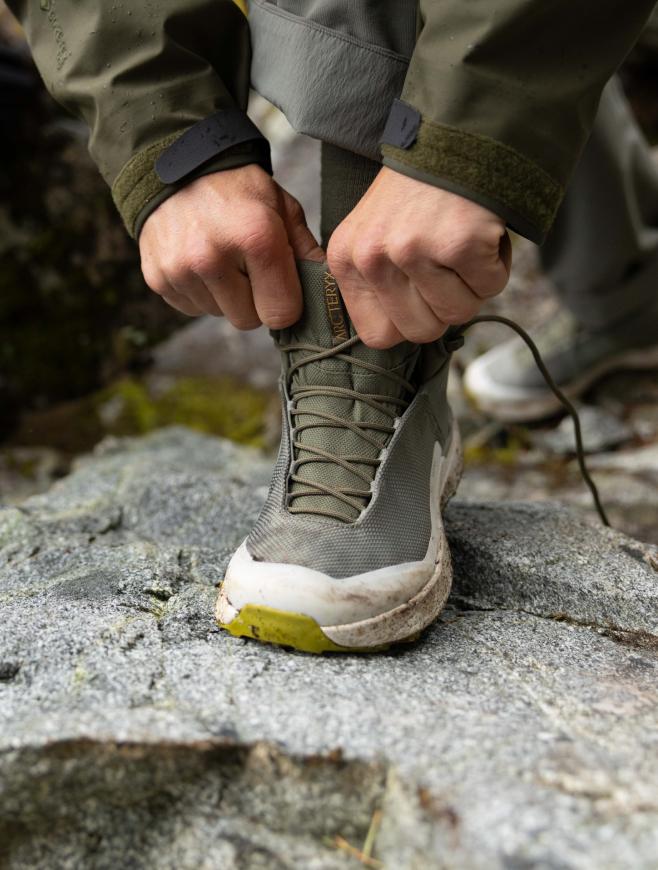
Key features of Arc’teryx footwear
While different activities call for different specifications, there are common denominators that are essential for every good outdoor shoe. From mountain running to approach shoes, the best outdoor shoes all have a couple of things in common: trustworthy traction and reliable comfort.
Outsole grip and traction: Vibram® megagrip for maximum performance
Climbers, runners, and hikers all know the perils of slick rocks, muddy trails, and steep, uneven inclines. For the best approach shoes, hiking shoes, and running shoes, you need to be able to have confidence in your traction. Ideal for high-performance outdoor activities, Vibram® Megagrip outsoles are engineered to deliver exceptional grip and traction across a wide range of surfaces, making them a key component of the top hiking shoes and best approach shoes alike.
What sets Vibram® Megagrip apart is its balance of durability with flexibility, providing long-lasting wear without sacrificing comfort. We added a custom lug pattern to the Vibram® Megagrip soles to further enhance traction and shed debris efficiently, which allows for smoother transitions and better control. As a bonus, it’s designed for both wet and dry conditions, ensuring consistent traction no matter the terrain or weather. This makes it a top choice for hikers, mountain and trail runners, and athletes who demand performance in every step.
When paired with a thoughtfully designed midsole and upper, the Vibram® Megagrip outsole transforms footwear into a dependable tool for performance in the most challenging environments.
Midsole and comfort: Arc’teryx’s adaptive fit technology
Arc’teryx’s Adaptive Fit Technology is designed to deliver a personalized, sock-like fit that enhances comfort and support during extended use. Integrated into the midsole and upper design on top of the Vibram® Megagrip outsole, our fit system wraps the foot snugly, reducing pressure points and cutting down on unwanted movement and rub.
Additionally, Adaptive Fit Technology provides excellent shock absorption and energy return, reducing fatigue on long hikes or demanding climbs. The seamless integration also minimizes friction, helping to prevent blisters and hotspots, even in rugged conditions. Lightweight yet supportive, this design technology emphasizes freedom of movement without compromising on protection or stability.
Waterproof Arc’teryx shoes
Just like in outerwear, GORE-TEX® shoes are ideal for wet, cold, and unpredictable weather. With a breathable yet fully waterproof membrane that keeps feet dry in rain, snow, or shallow creek crossings, they’re great for wet hiking trails, mountain environments, and all-around weather protection. If you’re trekking through alpine terrain, hiking in the Pacific Northwest, or facing multi-day backpacking trips where weather exposure is likely, GORE-TEX® provides dependable protection and peace of mind. It's especially beneficial in cooler climates, since staying dry is a crucial part of staying warm.
On the other hand, non-GORE-TEX® shoes are better suited for drier climates, high-output activities, or hot weather—basically, any activity where breathability is key. Since full waterproofing can be heavy, non-GORE-TEX® footwear can help you move faster and lighter. Without waterproofing protection, shoes tend to be lighter and more flexible, further reducing fatigue and improving ventilation during intense, strenuous movement.
For maximum weather protection, always go with GORE-TEX®—however, you might not need such durable waterproofing in drier conditions. Consider non-GORE-TEX® when speed, breathability, and lightweight design take precedence over all-weather protection. Think about where, when, and how you’ll be using the shoes.
Lightweight vs. supportive: finding the right Arc’teryx shoe
Somewhat related to the waterproofing considerations above, a final differentiator to consider in outdoor footwear is the balance between lightweight and supportive shoes. Here’s why and when weight matters, and when you might want the extra support.
Why weight matters in approach and hiking shoes
Light hiking shoes reduce the energy needed for every step, which becomes especially important on long trails or high-output activities. Over time, even a few grams saved per shoe can lead to significantly less fatigue, allowing you to move more efficiently, freely, and comfortably. We know every bit of weight counts, which is why our lightweight trekking shoes feature streamlined designs with minimal bulk, making them ideal for speed-focused objectives.
When you need more support
If you're carrying a heavy backpack, navigating rugged terrain, or spending full days on uneven ground, supportive footwear is crucial for stability, comfort, and safety. More structured shoes that offer enhanced ankle and arch support, reinforced midsoles, and durable materials can help stabilize your feet on tricky terrain while carrying heavy loads. In these conditions, the added support can prevent injury and improve balance, especially when hiking down steep slopes or scrambling through boulder fields.
In short, go light for speed and agility on well-maintained trails and opt for support when tackling technical terrain with additional heavy gear.
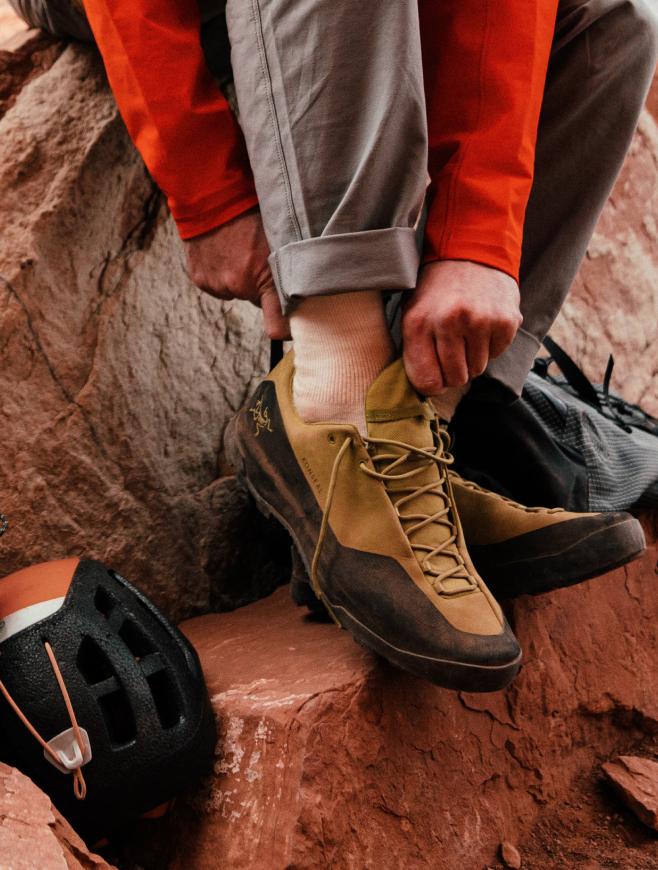
Best Arc’teryx shoes for technical and alpine approaches
Once you’ve narrowed down what you’re looking for, it’s time for the fun part. If you’re a climber, you want your approach shoes to have exceptional traction and comfortable support while remaining lightweight and agile as you navigate technical, rocky, and often steep terrain.
Features of the best approach and alpine footwear
In the alpine, you need a shoe with a secure fit and durable soles that’s still lightweight. This balance of weight optimization while still being supportive is imperative for long alpine approaches while carrying lots of gear. While moving fast and light through the approach is often the priority, climbers are also carrying heavy packs loaded up with gear, so a super lightweight trail running shoe isn’t going to cut it. They need a shoe that offers support without adding a ton of extra weight.
If you’re looking for the best approach shoes for alpine routes, check out the Vertex Alpine. Designed with alpine approaches in mind, these shoes balance the fit and performance of a trail running shoe with the stability required for long, technical approaches. The Vertex Alpine is light and fast while still delivering the durable support required for rugged and variable terrain. The sticky Vibram® sole ensures you don’t lose your footing in damp or steep conditions, and the tread is specifically engineered to provide grip while climbing on small edges.
To stay fast and light, these shoes are water resistant but not fully waterproof, making them the ideal choice for long summer approaches and drier climates.
Need for speed: how to move fast and smart with Arc’teryx shoes
Running on technical mountain trails requires speed paired with precision. With each foot strike, mountain runners must maintain their balance and agility on rocky and varied terrain. For this reason, our trail shoes offer shock absorption and weather protection with lightweight and comfortable breathability.
Arc’teryx technical mountain performance
To move quickly through technical, vertical terrain, you need a shoe that’s both lightweight and grippy, breathable and weatherproof, flexible and durable at the same time. If that sounds like too much to ask for, you just haven’t met the Sylan GTX Shoe yet.
This waterproof, breathable mountain running shoe is designed for runners looking to move with confidence on tricky terrain. Engineered specifically for high-speed technical mountain running, the Sylan GTX Shoe features a highly responsive EVA and Polyolefin midsole that absorbs shock and provides maximal rebound. The breathable Matryx® Micro upper ensures both durability and flexibility, while the Vibram® Megagrip outsole delivers sure-footed performance no matter the terrain. In the sole, the LITEBASE technology keeps the shoe as light as possible without sacrificing performance. As a bonus, tongue pocket allows you to tuck away your laces to prevent snags on the trail too.
Arc’teryx footwear for wide feet: finding the right fit
If you have wider feet, the most comfortable and best-fitting outdoor shoe will likely be a wide approach shoe or hiking boot. Whether it’s through different sizing or specific shoes designed for wider feet, we know fit matters, and we want to help you find the best overall outdoor shoes for your specific brand of adventures.
Why fit matters in approach shoes
Fit matters so that your shoes aren’t rubbing uncomfortably, creating hotspots or blisters. Fit also matters to ensure you can be precise and deliberate with your steps. If you have wider feet, look for adjustable lacing and roomier toe boxes to optimize the fit.
This is why we love the Kopec GTX Shoe. Designed for a precise yet adaptive fit, the Kopec GTX features adjustable lacing and a supportive, dual-density midsole, making it ideal for long approaches and varied foot shapes. Even though it’s a low-collar hiking shoe, it’s still waterproof so you’re prepared for changes in weather and terrain. It’s both agile and secure, made for day hikes and multi-day backpacking trips alike. The Vibram® Megagrip outsoles and custom lug pattern promise a secure grip on chossy or loose trails. Adjust the laces as you need, and let your toes spread out in the wide toe box as you hike.
Seasonal considerations: summer vs. all-weather Arc’teryx shoes
When looking for your best outdoor shoes, you also want to consider the season(s) you’ll be most active in. Don’t worry—whether you’re a fair-weather climber or an all-year hiker, we’ve got you covered.
Best Arc’teryx footwear for hot weather
For long summer hikes and approaches, you want a well-ventilated, lightweight shoe made with moisture-wicking materials. Breathable uppers allow heat and sweat to escape, keeping your feet cool, which also reduces the risk of blisters and hotspots. Lightweight construction minimizes fatigue on long, hot hikes, keeping your feet dry and cool so you can explore more.
Our favourite summer outdoor shoe is the Norvan LD 4 Shoe. Designed for long distances in warm, dry conditions, it’s breathable and ultralight. The ventilated uppers and moisture-wicking technology offer superior comfort on summer approaches and trail runs. The Vibram® Megagrip outsole with LITEBASE technology ensures you stay sure-footed in all terrain, promising durability across a range of conditions while shedding every gram possible. The Norvan LD 4 is built for summers in the mountains and technical trail runs. While it’s durable and protective, the design still prioritizes freedom of movement.
Arc’teryx shoes for year-round performance
If you’re looking for year-round performance, you’ll want to prioritize waterproofing and weather resistance. Make sure your outdoor shoes retain their grip on wet surfaces and keep water out.
For all-season protection, we love the Kopec Mid GTX Boot. With GORE-TEX® waterproofing, these shoes ensure your feet stay warm and dry regardless of the weather or the terrain. The traction is never compromised on slick, wet surfaces. The cushioned midsole offers comfort for alpine approaches of various lengths and over varied terrain. From day hikes to multi-day backpacking expeditions, all-season hikers can travel confidently. The Kopec Mid GTX Boot offers extra ankle protection in addition to its supportive cushioning and sticky Vibram® Megagrip outsoles. Even though they’re windproof and waterproof, they’re still breathable. That’s the magic of GORE-TEX®.
Blending performance with everyday comfort
The Kragg family of shoes is ideal for both quick approaches and quick recovery after the climb. It’s our answer to the climber’s conundrum of wearing flimsy flip-flops that are slippery but easy to get on and off at the crag or wearing rigid, restrictive approach shoes that you have to lace up every time. The Vibram® Megagrip outsole provides superior traction, but since the upper is only a single layer of Spacermesh fabric, the shoes remain breathable and stretchy, offering more comfort. The insoles are removable, allowing you to further customize your fit. As a bonus, the heel is collapsible, so you can wear your Kraggs around camp or as a belay slipper for even easier transitions.
Final takeaways: how to choose the best Arc’teryx outdoor shoes
Finding the best outdoor shoes comes down to understanding your environment, priorities, and activity needs. Consider key factors like terrain, weather conditions, and the intensity of your activity.
Matching the right shoe to your approach
For technical alpine routes, precision and weather-proof protection are top priorities. Deliberate, meticulous footwork often requires a tighter fit for maximum performance. However, for long hiking days, durable comfort may take precedence over technical precision, so some hikers prefer a roomier toe box for better freedom of movement.
Why Arc’teryx leads in outdoor footwear innovation
Arc’teryx continues to lead the industry in outdoor footwear innovation by designing shoes made for technical mountain terrain. From superior grip with Vibram® Megagrip outsoles to Adaptive Fit Technology for personalized comfort, every design element is crafted to enhance performance on and off the mountain. Lightweight yet durable construction, technical detailing, and a focus on breathability ensure that Arc’teryx shoes perform in the most extreme conditions without compromising comfort.
To learn more about our favourite outdoor shoes, check out our Footwear Finder and get out there with confidence. Shop our full collection of outdoor shoes online or at your nearest Arc’teryx store.
2025-10-31
Related Articles
Understanding Approach Shoes: Features & Functionality
Discover the essential features and functionality of Approach shoes in this comprehensive Arc'teryx guide.
Hiking Shoes vs. Boots for Your Trek
In this Arc'teryx guide, we break down the pros and cons of hiking shoes vs. boots to help you choose the perfect pair for your next trek!
The best waterproof trail and mountain running shoes for every terrain
From rugged mountain paths to forest trails, discover the best waterproof trail running shoes for tackling all terrains with confidence in this Arc'teryx guide!