You're mid-rappel and the wall grabs your shell. You reef on your zipper a little too hard on a chilly morning trail run and hear a sound nobody wants to hear. Or your shell starts delaminating and you're not even sure when it started.
When you adventure hard, things can happen. And if you're anything like us, your gear takes a beating.
The good news is, most common apparel damage is fixable. A down jacket tear, a failing zipper, delaminating seams, or a DWR finish that's stopped beading water aren’t signs your Arc’teryx jacket is done. They're signs it needs some attention.
This guide walks through everything you need to know about Arc'teryx apparel care, when Arc'teryx warranty repair or ReBIRD™ REPAIR service is the right call, and how to keep your gear performing across more seasons than you'd expect.
How to assess the damage to your Arc'teryx apparel
Before you reach for a repair kit or book an appointment, take a few minutes to assess what you’re dealing with. The fabric type, size, and location of the damage will determine whether a DIY fix is the right call, or whether professional service is the better route.
Start by identifying your garment's fabric. Softshells and synthetic insulated jackets, like the Atom Hoody, accept adhesive tape patches well. GORE-TEX® hardshells are trickier as the laminate construction means tape adhesion is less reliable, and a poorly applied fix can compromise the waterproof integrity of your gear more than the original damage.
Next, assess the severity of the damage. Small punctures and clean slits are good candidates for a DIY repair. Seam tape that's lifting, delamination, major panel tears, or a failing zipper are signs you should escalate to Arc'teryx warranty repair or find a store with dedicated ReBIRD™ REPAIR service.

Prepare your Arc’teryx garment for repair
Before you begin the process, the first step is to make sure your garment is ready for repair. Taking the time to clean, dry, and prep the surface sets the foundation for a long-lasting fix and goes a long way toward preserving membrane performance down the road.
Cleaning and surface prep tips
Clean both the inside and outside of the damaged area with isopropyl alcohol to remove any oils, dirt, and residue that would prevent repair tape adhesion. Let the surface dry completely before moving on.
Before patching, flatten the fabric, push any loose down back inside, and trim any frayed threads so the patch lies flat.
When the care label allows, machine wash your garment first using a gentle cycle and a technical detergent.
What is technical detergent?
Technical detergent is a low-residue cleaner formulated for performance fabrics. It removes oils and dirt without leaving surfactants that can block breathable membranes or compromise DWR (Durable Water Repellent) performance. Use the amount recommended on the label and always add an extra rinse to clear any remaining residue.
We recommend using our Nu Technical Detergent when washing any GORE-TEX®, fleece, and softshell fabrics.
DIY repair methods for common issues
Before you go, it's worth keeping a small repair kit in your pack. A few adhesive patches, some technical tape, and a zipper lube can mean the difference between a minor inconvenience and a cut-short adventure.
A lot of common repairs can be handled at home. Assess the level of damage first, and if it's a candidate for a DIY fix, the following methods will walk you through the repair.
Learn more about DIY repair and product care here.
Using pressure-adhesive patches and technical tape
For most small tears and punctures, an adhesive repair patch or technical tape is your best solution — one where no stitching is required, and there’s no risk of compromising the membrane.
If you're out in the field, a temporary patch will hold until you can do a proper repair. When you're back home, take your time to do the repair right.
Selection and prep
Choose a patch that overlaps the damage by at least 1cm on all sides. Clean both the inside and outside of the damaged area with isopropyl alcohol and allow it to dry fully before applying.
Application
Peel the backing, centre the patch over the damage, and press firmly from the centre outward. Use a roller or the back of a spoon to push out any air and ensure full adhesion. Let the patch bond undisturbed for around 24-48 hours and do a gentle flex test before washing.
For larger damaged areas, layer patches with a bigger outer patch on top. Keep in mind that technical tape may adhere less reliably to some GORE-TEX® hardshells, so if you're working on a laminated shell, test a small area first.
Tip: Technical tape is worth considering over a branded patch if discretion matters to you. Some people prefer technical tape for being more discreet, flexible, and easier to apply. Technical tape sits lower profile on the fabric, naturally bends and moves better with the garment, and tends to be less visible on technical fabrics, especially on darker colourways.
Repairing tears in waterproof and insulated jackets
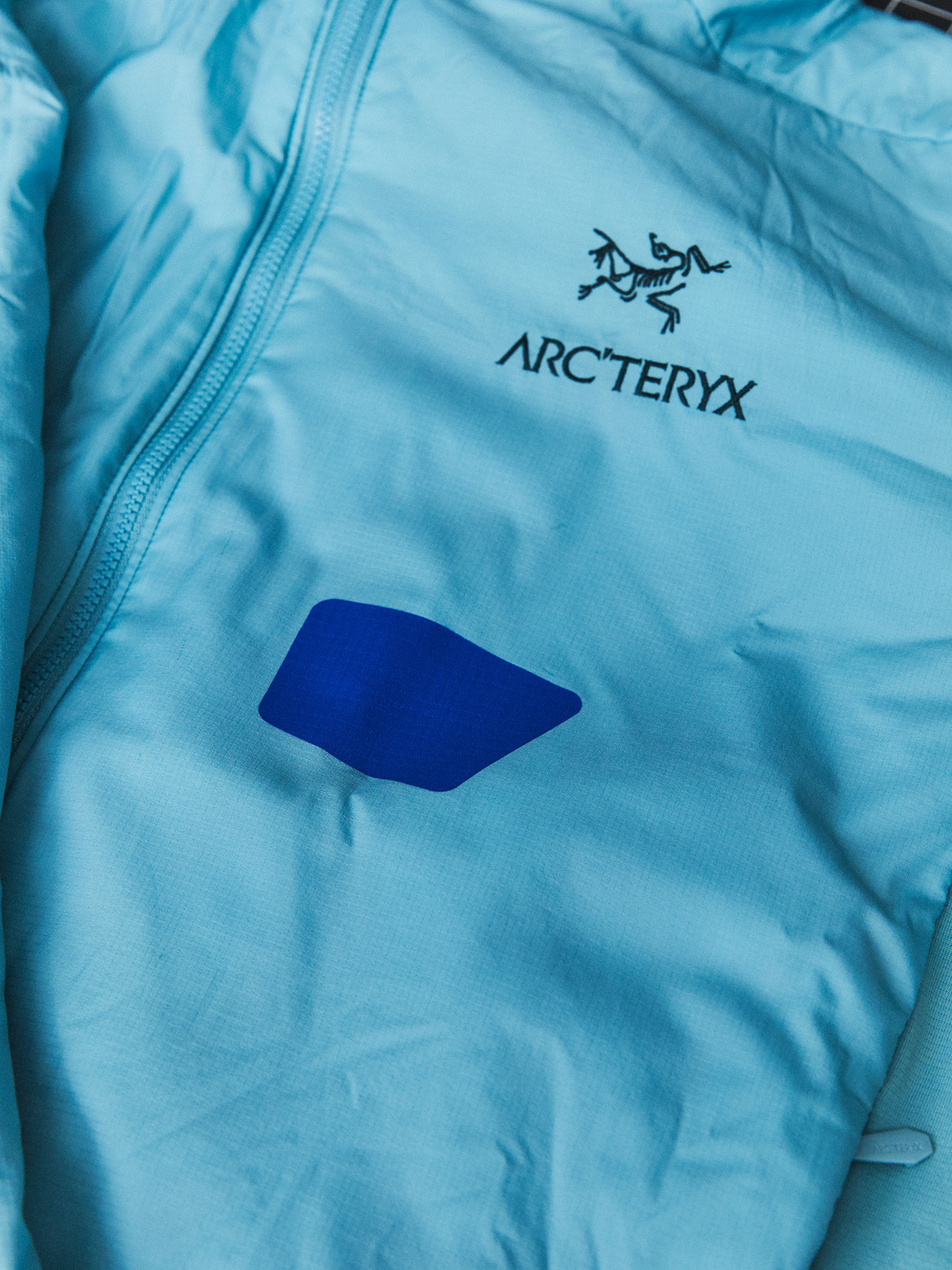
Repairing tears in waterproof and insulated jackets depends on what's underneath the outer fabric.
For waterproof shells, use a nylon or GORE-TEX® repair kit with adhesive patches. Some kits allow for gentle heat application to improve adhesion, but always be sure to follow the repair kit guidance and don't exceed the recommended temperature for laminated fabrics.
For down and insulated pieces, start by pushing any loose fill back into the baffle before you do anything else. Then apply an oval-shaped patch rather than a square or rectangular one as the rounded edges are less likely to catch and lift over time.
If you're dealing with seam tape that's lifting, delamination, or a tear that's too complex for a DIY fix, escalate to Arc'teryx product service request or ReBIRD™ REPAIR service. At a ReBIRD™ Service Centre, techs can apply an SV Insert Patch: a heat-activated, fully waterproof repair that takes about 60 seconds and may be offered at no charge.
Stitching techniques for non-laminated fabrics
Stitching repair techniques are mainly suitable for base layers, knits, and other non-laminated pieces like the Rho Hybrid or Merino wool products.
Use short, even stitches and backstitch at both ends to lock the repair and prevent further fraying. And always stitch sooner rather than later as a small hole that's ignored has a way of becoming a much bigger problem.
If you're unsure about the repair or dealing with a complex seam or hardware issue, a local tailor or cobbler is worth consulting before you attempt it yourself.
Tip: Reserve stitching repairs for non-laminated fabrics only. On laminated shells like GORE-TEX®, a needle that punctures the waterproof layer can create more problems than it solves.
Zipper and hardware upkeep
Clean zippers with a dry toothbrush to clear dirt and debris from the teeth. For sticky zippers, lubricate with petroleum jelly or zipper lube. For metal zippers, use a graphite pencil.
Avoid using WD-40 near technical fabrics as it can compromise the membrane and DWR coating.
If cleaning and lubrication don't solve the problem, stop there and submit an Arc'teryx product service request or ReBIRD™ REPAIR service to explore our professional repair options.
Emergency field repairs and temporary fixes
When something goes wrong mid-adventure, you’ll want to stabilize the damage as soon as possible and keep moving. A proper repair can wait until you're back home.
Apply technical tape or an adhesive patch to the inside of the tear first, using it to align and close the fabric. This keeps the damage from spreading and protects the area until you can do a full repair.
Duct tape also works in a pinch, but be careful to only use it as a last resort as it can leave adhesive residue behind that complicates a cleaner repair later.
If you have GORE-TEX® patches in your kit, gently warming one with your hands or body warmth can help set the adhesion on the go. Finish the repair properly once you're home.
Fixing pulls and snags on soft fabrics
For pulls and snags on soft fabrics, often the pinch-and-roll technique is all you need. Gently stretch the fabric around the snag, pinch the raised fibres, and roll them back into place to realign the weave.
Resist the urge to cut any loose loops as cutting can cause the snag to unravel further. If the fibre won't roll back in the garment, use a needle to coax it through to the interior of the fabric instead.
Restoring waterproofing and durability after your DIY repair
Once your garment has been successfully patched and cured, restoring the DWR (Durable Water Repellent) performance is what brings it back to full function.
What is DWR?
DWR (Durable Water Repellent) is the thin, factory-applied waterproof coating on face fabrics that makes water bead and roll off. Over time, dirt build-up and abrasions can reduce this beading. Washing garments with technical detergent, rinsing thoroughly, and reapplying a compatible spray or wash-in DWR product restores beading and helps preserve your outerwear’s waterproof performance.
Re-proofing
To restore the waterproof performance of your garment, start by washing it as per the care label using technical detergent on a gentle cycle with an extra rinse to clear any residue. Then apply a spray-on or wash-in DWR product. Spray-on is a popular choice for targeted application and strong water beading results.
When to use Arc'teryx professional repair services
Zipper replacement, seam tape failures, large panel tears, and delamination near high-stress areas all require expert tools and heat and adhesive controls that go beyond safe DIY territory, particularly on highly technical pieces like the Alpha, Beta, and Atom families. For these types of repairs, you’ll want to explore our professional Arc'teryx warranty repair or ReBIRD™ REPAIR service.
Arc’teryx warranty repair eligibility and process
Through the Arc'teryx Limited Warranty, warranty repair covers defects in materials and workmanship for the practical lifespan of the product. Normal wear and tear, accidental damage, rips, tears, and misuse are not covered under warranty.
To submit a claim, do not return your product to your dealer. Visit our Product Service page to fill out a Product Service Request form. You'll need proof of purchase from an authorized Arc'teryx dealer and clear images of the damage. Hold onto any original components where possible as they can help with the assessment. For full eligibility details, visit our Limited Warranty page.
If your repair isn't covered under warranty, non-warranty repairs are still available through ReBIRD™ REPAIR service, either by mail or drop-off at a Service Centre, depending on your location and urgency.
Submitting repairs through the ReBIRD™ Program
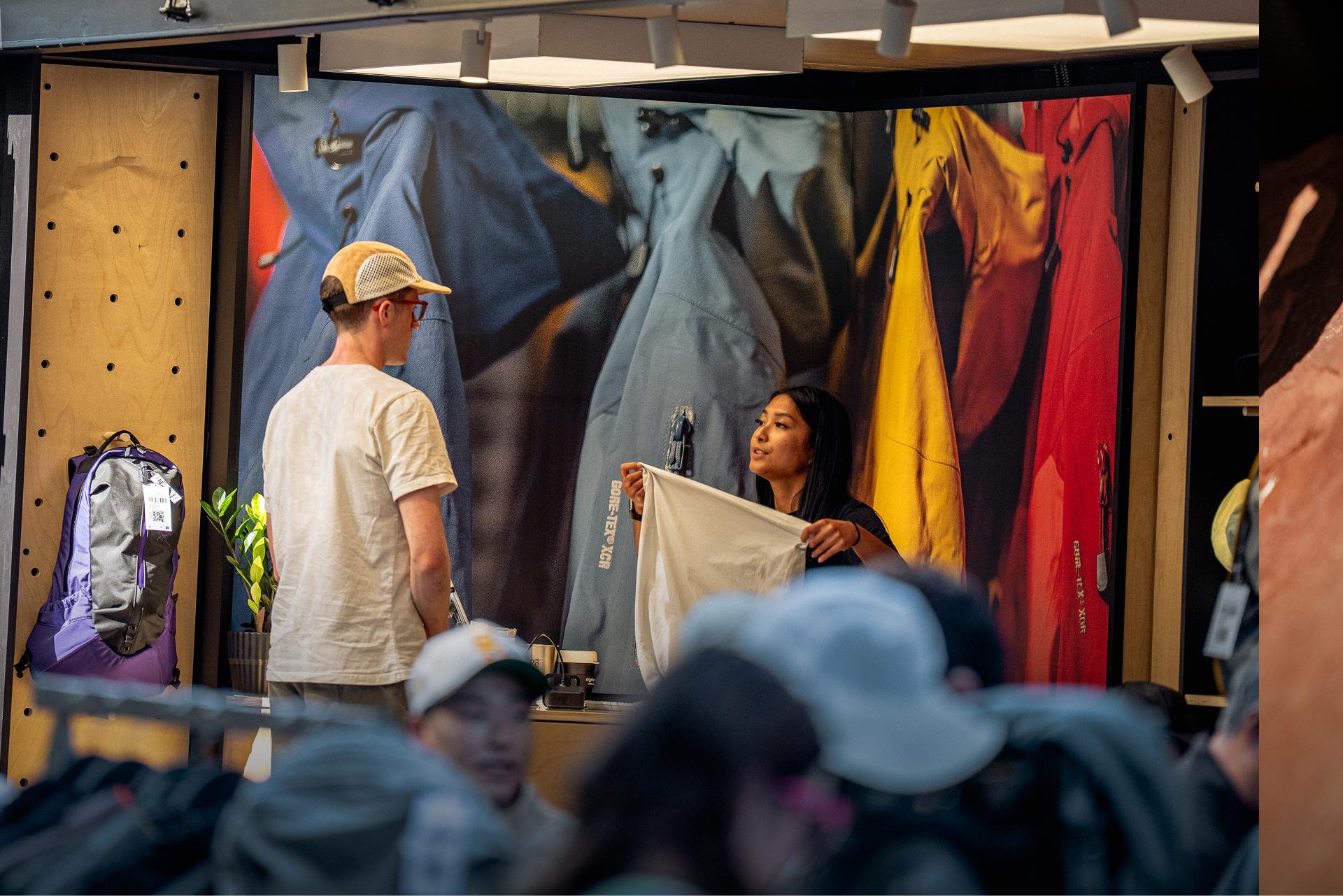
ReBIRD™ services include complimentary on-site assessments, GORE-TEX® washing and reproofing, zipper repairs, buckle replacements, and fabric patching. Service Centres are located in New York, Vancouver, Toronto, Beijing, Tokyo, Boulder, and London — and we're adding new locations every year. Find your closest Arc’teryx Service Centre here.
At a ReBIRD™ Service Centre, techs can apply an SV Insert Patch, a heat-activated, fully waterproof repair that takes about 60 seconds. Depending on the service, this may be offered at no charge.
How to submit a repair request through ReBIRD
Gather your proof of purchase and clear, close-up photos of the damage to your Arc’teryx apparel, then visit our Product Service page to submit a repair request. Choose mail-in or drop-off at a Service Centre. At some locations, same-day services like GORE-TEX® washing, reproofing, and patching may be available.
Long-term care tips to minimize future repairs
Preventing damage before it starts comes down to a few simple routines that protect your face fabrics, membranes, and hardware over the long run.
Wash Arc'teryx apparel with a technical detergent.
Use a technical detergent, follow the care label, and always add an extra rinse to clear soap residue from the membrane. As a general rule, wash your gear every five to eight days of heavy use or every 10-20 days of light use. Regular washing actually helps maintain DWR performance rather than degrade it.
For full washing guidance and care instructions by gear type, visit our Arc'teryx care guide.
Restore DWR reproofing when water stops beading.
When water stops beading and starts soaking into the face fabric, it's time to reproof. A targeted spray-on DWR applied after washing is the most effective way to restore beading performance.
Keep zippers and hardware clean and lubricated.
Lubricate zippers regularly with petroleum jelly, zipper lube, or a graphite pencil.
Avoid solvents near technical fabrics.
Keep WD-40 and similar products away from technical fabrics — they can compromise both the membrane and DWR coating. For complex seam or hardware issues, a local tailor or cobbler is worth consulting before attempting it yourself.
2026-07-29
Related Articles
How Does the Arc'teryx ReBIRD™ Program Work
Learn how the Arc’teryx ReBIRD™ program works—shop pre-owned gear, trade in used items for credit, and extend the life of your kit.
How to Care for Your Hiking and Outdoor Gear
This Arc'teryx guide offers essential tips for maintaining and caring for your hiking, camping, and outdoor gear, including outerwear and footwear.