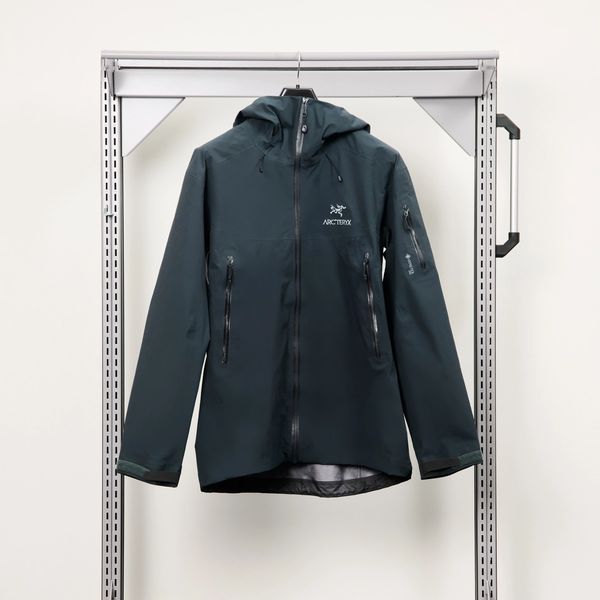
Durable Water Repellent (DWR) is a polymer coating which decreases the surface energy of the face fabric, making the textile hydrophobic (water repelling) — this causes water to bead and roll off the garment. This is a high-tech engineered coating that requires proper care to function properly. After some use you may find your garment is no longer beading water and the face becomes saturated with water: This is called “wetting out”. Wetting out leads to compromised breathability and increased condensation in the jacket, making you feel wet, clammy, and cold.
Contaminated DWR can easily be fixed by first cleaning the garment (see washing instructions) to remove the contamination, then drying completely, and then finally heating the garment to reactivate the DWR coating. If your garment is no longer beading water, even after it has been washed and tumble dried, it is time to re-apply DWR.
Garments where the DWR has been worn off can also be easily fixed by re-applying DWR. DWR most commonly wears off in high-wear areas such as the back, shoulders, and cuffs.
How to reapply DWR

1. Clean your garment
Start with a clean surface. Wash your garment.

2. Test existing DWR
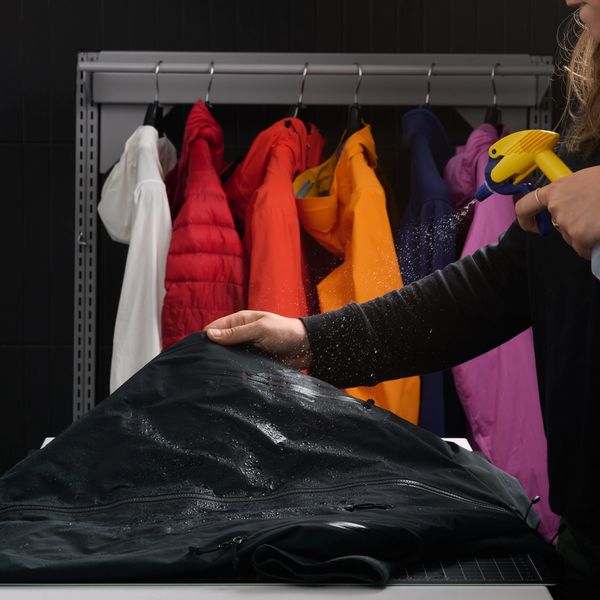
Close all zippers. Wash, and dry your garment with heat. To test the existing DWR, spray water on it and seeing if the water beads before attempting to re-apply.

3. Spray DWR
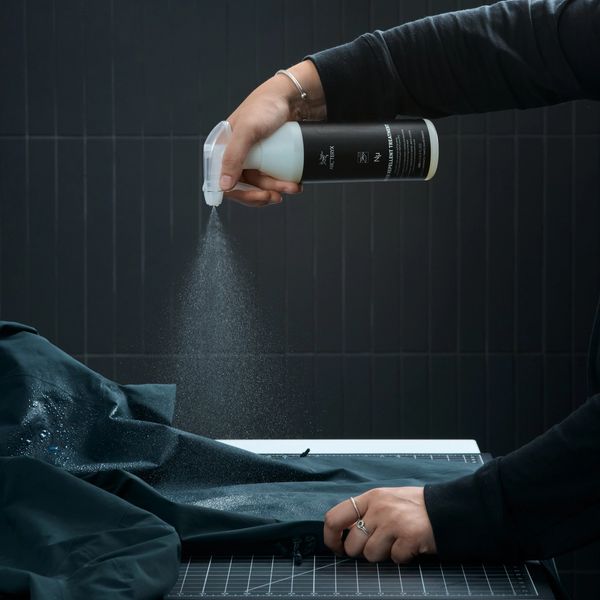
Hang or lay garment on a flat surface. Shake bottle well and spray evenly onto face fabric.

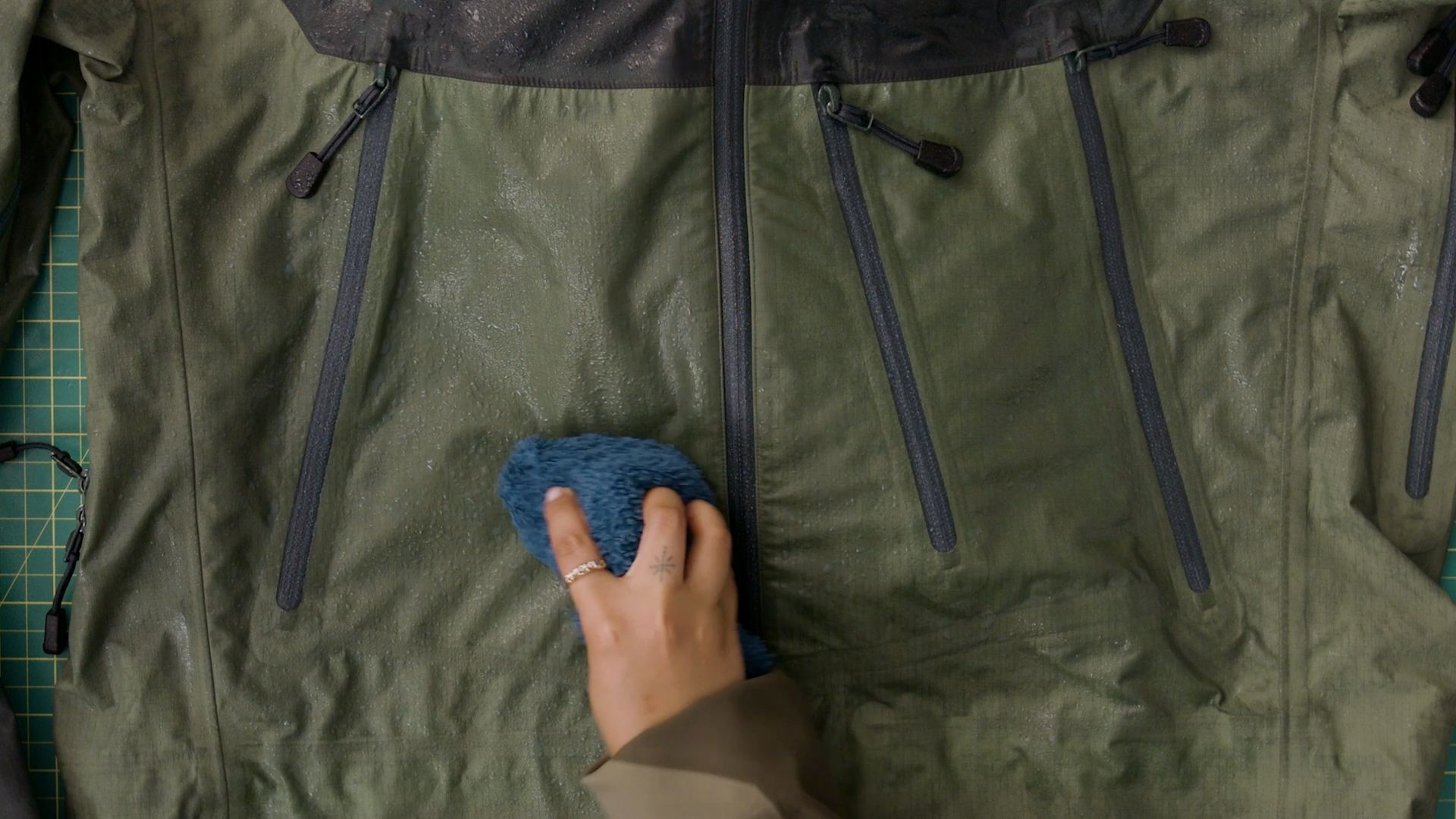
4. Rub it in
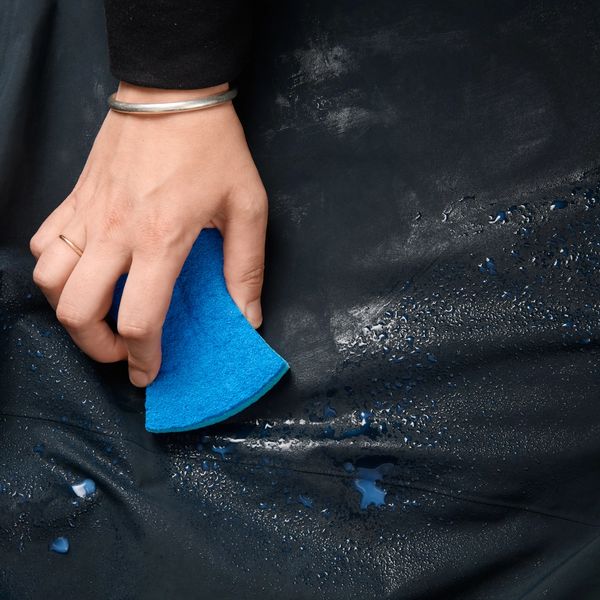
Rub in with a clean sponge to cover the fabric evenly and avoid staining.

5. Air dry
Allow garments to air dry for 12-24 hours. Tumble drying is also recommended.

6. Heat gently
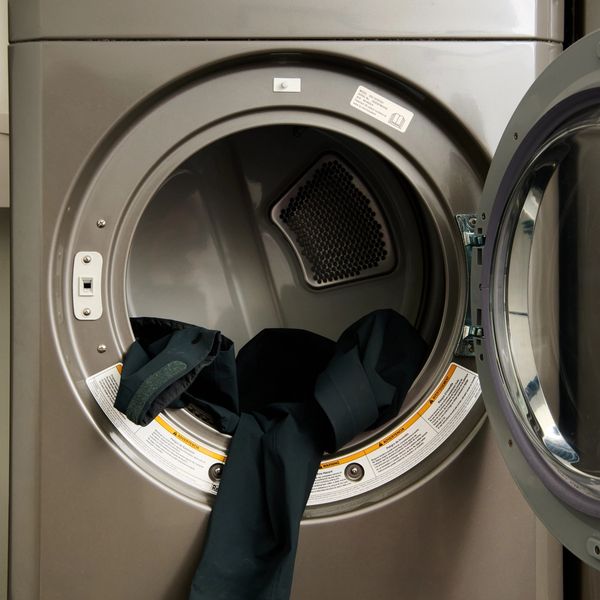
Heat treatment improves effectiveness. Put dried garments in the dryer for 20 minutes on gentle heat.
Durable Water Repellent
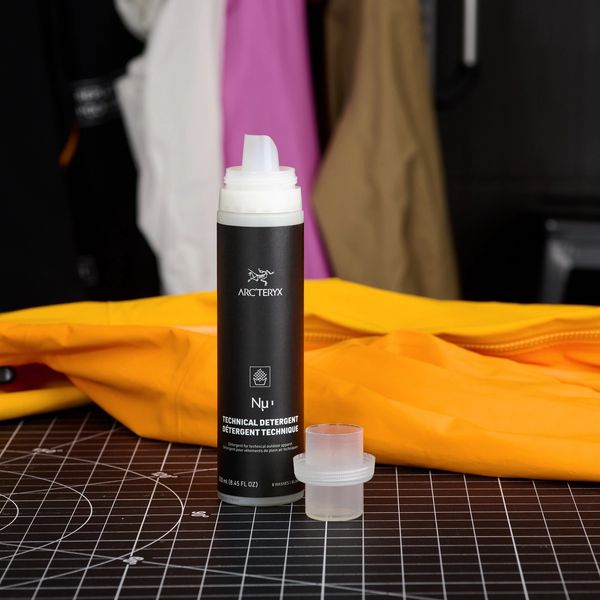
A spray-on DWR treatment will offer superior performance and the ability to target high-wear areas. We recommend Arc’teryx Nu Durable Water Repellent Spray.

FAQ
Heat is essential for DWR to work properly. After applying or washing your jacket, tumble drying on low heat helps reactivate the DWR finish, allowing water to bead off the surface again.
Without heat, the treatment won’t fully bond to the fabric, meaning your jacket may not shed water as effectively. Using a dryer ensures your gear regains its water‑repellent performance.
If you do not have access to a dryer, find a service centre near you to have your jacket washed and treated (GORE-TEX® and down only)
Note that with GORE-TEX® garments, even if the face fabric is completely wetting out, the waterproof membrane will still stop any water from passing through. However, you may still feel wet inside the garment, this is simply because a wet-out face fabric will not breath and the jacket will start to condense any moisture and sweat that would normally be transferred out of the garment inside. As of 2025 Arc’teryx has completed our planned phase out of PFAS from our products. As a result of this change, more frequent washing and tumble drying may be required to achieve the same level of performance.
Wetting out occurs when DWR stops working due to contamination or is worn off the fabric. The specific use, storage, and care over the lifetime of each jacket will affect how long and how well each application of DWR may last and perform. Exposure contaminants such as sweat and other body oils, dirt, smoke, sunscreen, and bug spray may contaminate compromise DWR causing wet out.