Headed out for a multi-day trip? The type and quantity of clothes to wear backpacking depends on the conditions and temperatures you’ll encounter, your ideal pack weight, and your tolerance for odour (let’s be honest here). The basic principles of layering are the same for a season on the PCT or a three-day trek — start with a moisture-wicking ultralight base layer, add in a warm midlayer or insulated puffy, and top it off with a waterproof shell. Safety on the trail means prioritizing durable, technical clothes that will perform in tough conditions. This isn’t hyperbole — choosing inappropriate gear could mean the difference between comfortably finishing your objective and bailing out early.
Arc'teryx base layers
Think of designing your backpacking kit like building a house — your base layer is the foundation and how well it works has a huge impact on comfort and safety. Picking the right weight and material for a base layer depends on the conditions, your output and hike intensity, and pack weight. For any trip you’ll benefit from durable, ultralight base layers that move moisture away from your body. Moisture-wicking fabrics pull sweat off skin and spread it across the fabric surface to speed evaporation, reducing chafing and clamminess. Quick-dry, wicking tops help you stay comfortable for long days on trail during variable exertion.
In any high-output situation, keeping your skin dry and comfortable is your number one priority.
Well-fitting, moisture-wicking, quick-dry tops and bottoms are critical to keeping your body temperature stable and capitalizing on the performance of your other layers. Base layers can be tank tops, short sleeve tees, or long sleeve shirts with a close-to-body fit that easily picks up and moves moisture away from the skin. These moisture-wicking base layers also prevent chafing that comes from wet fabric rubbing on skin for long periods of time. If you’ve heard the saying “cotton kills”— this is because cotton traps moisture, takes a long time to dry, and increases hypothermia risk in windy and cold conditions. Remember, if you’re hiking in cold conditions, it’s easier to stay warm than to get warm.
A good rule of thumb for packing base layers (both tops and bottoms) is to think of them as “daytime layers” and “nighttime layers.” Bring a few moisture-wicking, quick-dry ultralight base layers to wear while hiking. These are your “daytime” layers that you sweat in. For tops, depending on your preference or the temperature you might pack a mix of sleeveless, short sleeve, or long sleeve options. Pack one base layer to wear for sleeping: This is your “nighttime” layer — it stays clean and is only worn at camp, not for hiking.
Base layers are primarily made of Merino wool, synthetic fibres, or a mix of the two. Choosing between them mostly comes down to personal preference. Here are some pointers to help you decide:
- Merino wool delivers excellent temperature regulation and moisture wicking — it adds reliable warmth in cold conditions and helps you stay cool in the heat. Backpackers love this fabric because of its natural odour-resistant properties — it’ll keep you smelling fresher than synthetics. It's a soft, durable fibre, but can get snags if it’s not taken care of properly.
- Synthetic fabrics are made from a variety of fibres and are often specialized in their benefits. They make great workhorses for backpacking trips because they manage moisture really well, pulling the sweat away from your body so it can evaporate. They tend to be quite durable (depending on the fabric) and lightweight.
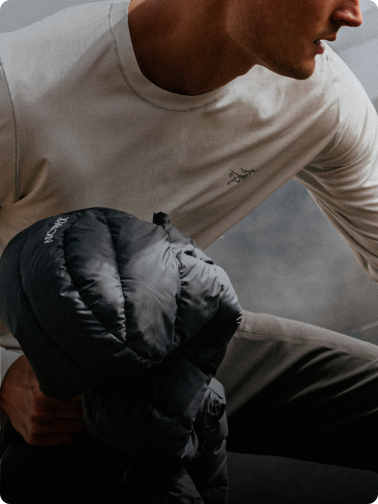
Arc'teryx midlayers
A midlayer is an insulating piece that is designed to be worn alone but works within a layering system such as over a base layer and under a hardshell. It traps and dumps body heat (depending on what you need in the moment) while releasing excess moisture. For backpacking, choose breathable pieces made of fleece or a lightweight synthetic that insulate when damp. Many pieces have zips or vents to further dial in your temperature preference. These easy-to-stow layers provide breathable warmth in changing elevations and temperatures.
Technical fleece midlayers retain warmth even when they’re wet, making them a strong player in damp conditions. They also dry pretty quickly if you get a window of sun or a bit of wind to speed things up. Even though some can be a bit bulky when packed, they are worth the space because of their reliable performance in challenging conditions.
Synthetic midlayers offer more warmth than fleece and deliver a higher level of weather protection. They often have a smaller pack-size because of their compressible material. Although they’re not waterproof, their DWR (Durable Water Repellent) treatment means they shed a short period of light rain and help to keep out the wind.
In general, high-output days favour breathable fleece but if you want something that’s specifically for camp time in dry cold (and you’ve got room in your pack), you can justify an additional lightweight synthetic midlayer for additional warmth.
Arc'teryx waterproof shells
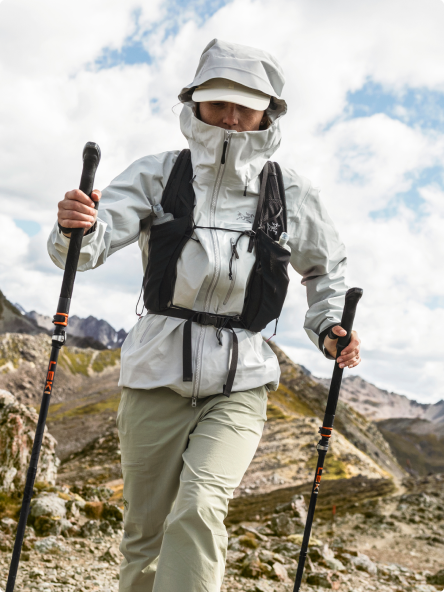
Safety starts with staying dry. Your outer layer of defense in wind or rain is a waterproof, breathable shell jacket and pants that block weather while allowing internal moisture (sweat) to escape, preventing you from getting clammy and losing heat. It’s important to carry shell layers even if you’re not sure you need them — high-alpine weather is unpredictable and you’ll be happy to be prepared if forecasts change. Make sure you get a jacket that is fully seam-sealed to give extra protection in sustained downpours (all Arc’teryx hardshells are seam-sealed)
A great choice for backpacking is a streamlined jacket (i.e. one that has high-utility technical details, but without excess weight) that’s seam-sealed, breathable, and packs down small like a jacket from the Arc’teryx Beta family. Consider also bringing a waterproof pant if it looks like it’s going to be wet for a good portion of the trip.
Other features to consider in choosing your shell: a helmet-compatible hood if alpine travel is on the route and pit zips to dump heat when you’re on the move.
Pro tip: always pack your waterproof jacket and pant near the top of your bag or in an easily accessible pocket so when weather moves in quickly you can layer (or de-layer) without having to dig through other gear, potentially getting everything wet.
Arc'teryx insulated jackets
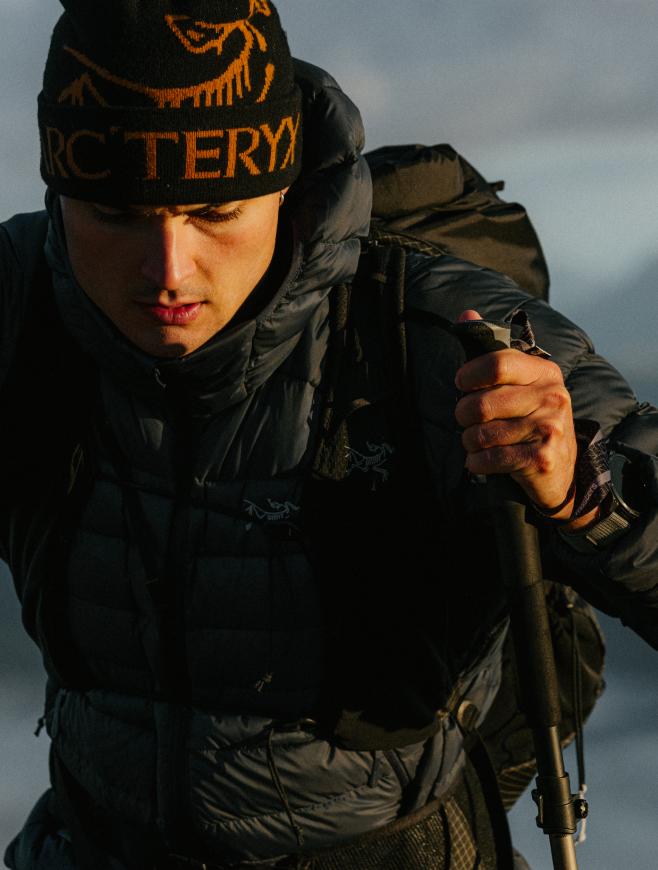
An insulated jacket delivers warmth for camp time and early morning starts without adding excessive weight or bulk to your pack. One of the key metrics of insulation is the warmth-to-weight ratio — which is a way of describing how much insulation a garment provides. Higher ratios deliver more heat for fewer ounces which is a key metric when you’re designing an ultralight backpacking clothing list. Down fill typically leads this metric, while synthetics offer better performance when damp or wet.
Down insulation (men’s, women’s) remains the lightest and warmest material for jackets by weight. Packing a compressible, insulated jacket from the Arc’teryx Cerium family won’t take up a ton of space in your pack and will deliver critical warmth when you’re making camp or getting on the trail before sunrise.
If you’re going to be hiking or moving in your insulation layer, it might be more effective to pack a synthetically insulated jacket (men’s, women’s). These pieces will still provide warmth when they’re wet (either from sweat or light precipitation) and will dry faster.
A quick basic rule is to pick down insulation for cold, dry, static conditions, and synthetic insulation for wet climates or more high output situations. Pick a comfortable size that’ll easily layer over your base layers and fit under your waterproof shell.
Pro tip: If you pick a hooded midlayer, try it out with your waterproof shell on day hikes to make sure that the hoods “nest,” or lay easily within each other without pulling on your neck. You can also choose a hoodless midlayer for less bulk.
Socks for backpacking
The goal for socks for an ultralight backpacking clothing list is to: stay dry, prevent blisters or chafe, and stay warm at night with a minimalist rotation.
Prioritize comfort and make sure your socks fit well. Test them out on several day hikes before taking them into the backcountry. As the pros say, “nothing new on race day.” Avoid cotton and choose moisture-wicking Merino wool or synthetic fibres that will prevent blisters and trench foot. The amount of cushioning is up to personal preference and will vary based on your foot, your footwear, and your level of comfort.
Carrying multiple pairs of socks — at least one pair for hiking (two if you’ll be on trail for multiple days) and a warm, dry pair for sleeping — is a good rule of thumb. Here’s a sample rotation for your socks:
- Day: swap Pair A/B daily; air the used pair on your pack.
- Night: reserve Pair C (sleep-only) for warmth and to protect your sleeping bag’s interior.
Footwear recommendations for backpacking
When choosing footwear, consider lightweight trail shoes or hiking boots based on trail difficulty and your specific support needs. Trail runners are lighter, dry faster, and work best on well-maintained trails with lighter pack weights. Boots deliver more ankle support and underfoot protection, and are better for rougher terrain, scree, and heavier packs.
If you get new boots, make sure to use them on multiple day hikes before taking them for an extended route. Test them with the socks you’ll be using and after long walks (when your feet are the most swollen). Ensure toe splay and downhill clearance to prevent black toenails on steep descents.
Having a pair of dedicated lightweight camp shoes is a must! These can be sandals or clogs and are often airy, open, and made of plastic materials so they’re good for stream crossings and recovering around camp.
You might also consider a pair of gaiters — protective fabric sleeves worn over footwear and lower legs. They seal out snow, mud, and trail debris, keeping socks and boots drier and cleaner. Use them in variable or messy conditions for improved comfort and reduced hot spots.
Essential accessories for comfort and protection
To round out your ultralight backpacking clothing list, here are a few small, high-utility items that punch above their weight for comfort and safety (any little “treat” when you’re ten days into a long trek is really worth it).
Sun and wind protection
- A sweat-wicking sun hat, sunglasses, and a UPF long-sleeve sun shirt for high-elevation exposure
- A lightweight windbreaker can double as wind protection
- You’ll be thrilled to have a buff or bandana for sun, sweat, and dust protection
Cold protection
- Always bring a warm hat and mittens or gloves (even if the forecast is balmy). You lose heat the fastest through your head and hands, and these are critical items for emergency situations
Camp essentials
- A headlamp with extra batteries to see your way around camp and for alpine-starts before sunrise
Fabric performance and material selection
Here are some key factors to consider when choosing the fabric for your backpacking clothes:
- Avoid cotton: It holds moisture and raises hypothermia risk in cold, windy conditions.
- Moisture-wicking, quick-dry base layers help you to stay comfortable in high-output activities and prevent chafing.
- Merino wool base layers are naturally odour-resistant, soft, and moisture-wicking, making them perfect for your “at-camp” layers. They’re great for sleeping or adding extra warmth on cool days or nights.
- Down insulation delivers the best warmth-to-weight ratio and is really compressible and easily packable. But it’s not ideal in sustained, wet conditions or in more active scenarios.
- Synthetic insulation keeps you warm even when it’s wet so it’s a better choice if there are storms in the forecast or if you’ll be in high-output cold conditions.
- Fleece also keeps you warm when it’s damp and is an ideal midlayer for misty or humid climates.
Care and maintenance of backpacking clothing
Now that you’ve dialed in your backpacking kit, make sure you protect your investment by taking great care of your gear — both on trail and at home. If you give your backpacking clothes dedicated love, they’ll carry you for long distances for many years.
Here are some tips to extend garment life and maintain technical performance:
- Bring a small repair kit on your trip — zippers and seams can fail in the field and you’ll want to be able to make repairs on the fly. You can tailor these to your specific needs, but a needle, heavy thread, repair tape, small scissors, and spare buttons/snaps are great things to have.
- It might seem picky, but it really helps to follow the specific wash instructions for your gear. This will preserve fabric loft, breathability, and durability. Find lots of helpful tips here.
- Apply DWR (Durable Water Repellent) treatment to shells when water stops beading on them.
- Air-drying Merino wool base layers protects the fibres and makes them last longer.
- Store your down puffies in an uncompressed state to maintain loft. They’ll be more effective for a longer period of time.
2026-09-30
Related Articles
How to Care for Your Hiking and Outdoor Gear
This Arc'teryx guide offers essential tips for maintaining and caring for your hiking, camping, and outdoor gear, including outerwear and footwear.
Hiking Shoes vs. Boots for Your Trek
In this Arc'teryx guide, we break down the pros and cons of hiking shoes vs. boots to help you choose the perfect pair for your next trek!