In harsh mountain environments, choosing between a shell and insulated ski jacket can dictate how well your outer layer protects you through varying conditions and output levels. Think of your ski jacket as your personal shelter against wind, snow, sleet, rain, and rapidly changing mountain conditions. The wrong outer layer can make or break a day on the skintrack or the chairlift.
With so many technical options available, one of the most common questions skiers and snowboarders run into is whether a shell vs. insulated ski jacket is right for you. What’s the difference? Which one works best for your conditions? Where do you even begin to look?
Arc’teryx builds ski and snowboard apparel shaped around all-weather protection, efficient warmth, optimal performance, and your ability to move with ease. Every piece is designed to work as part of a strategic layering system, whether that means pairing a highly breathable shell with insulating layers for ski touring, or relying on an insulated ski jacket with your other layers for frigid resort laps.
This guide breaks down the key differences between shell and insulated jackets, the factors to consider, and how to choose the right outer layer for your mountain objectives.
What’s the difference between shell vs. insulated ski jackets?
The key difference between a shell vs. insulated ski jacket comes down to how each manages weather protection and warmth. Shell jackets prioritize breathable protection and temperature regulation, while insulated jackets combine weatherproofing with built-in warmth for colder conditions.
Ski shell jacket explained
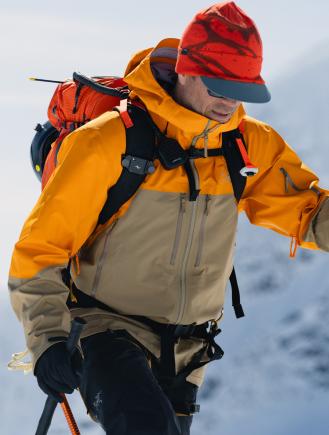
A shell jacket is a lightweight, non-insulated outer layer designed to block wind, snow, and moisture while maximizing breathability. It’s built for high-output activities like touring and freeride skiing, where managing heat and moisture is just as important as staying protected from the elements.
Most skiers pair a shell with insulating layers and adjust the thickness or materials of their other layers as temperatures and conditions shift throughout the season. In warmer climates or during spring skiing, a shell worn over a baselayer is often all you need for light protection without excess warmth. In the heart of winter, the same shell can be paired with an insulated midlayer to create a more robust cold-weather system.
Arc’teryx offers a range of shells tailored to different needs, from ultralight options like the Rush Jacket for breathable touring performance to pinnacle freeride shells such as the men’s Sabre Jacket and women’s Sentinel Jacket for maximum durability and weather protection in demanding alpine terrain.
Insulated ski jacket explained
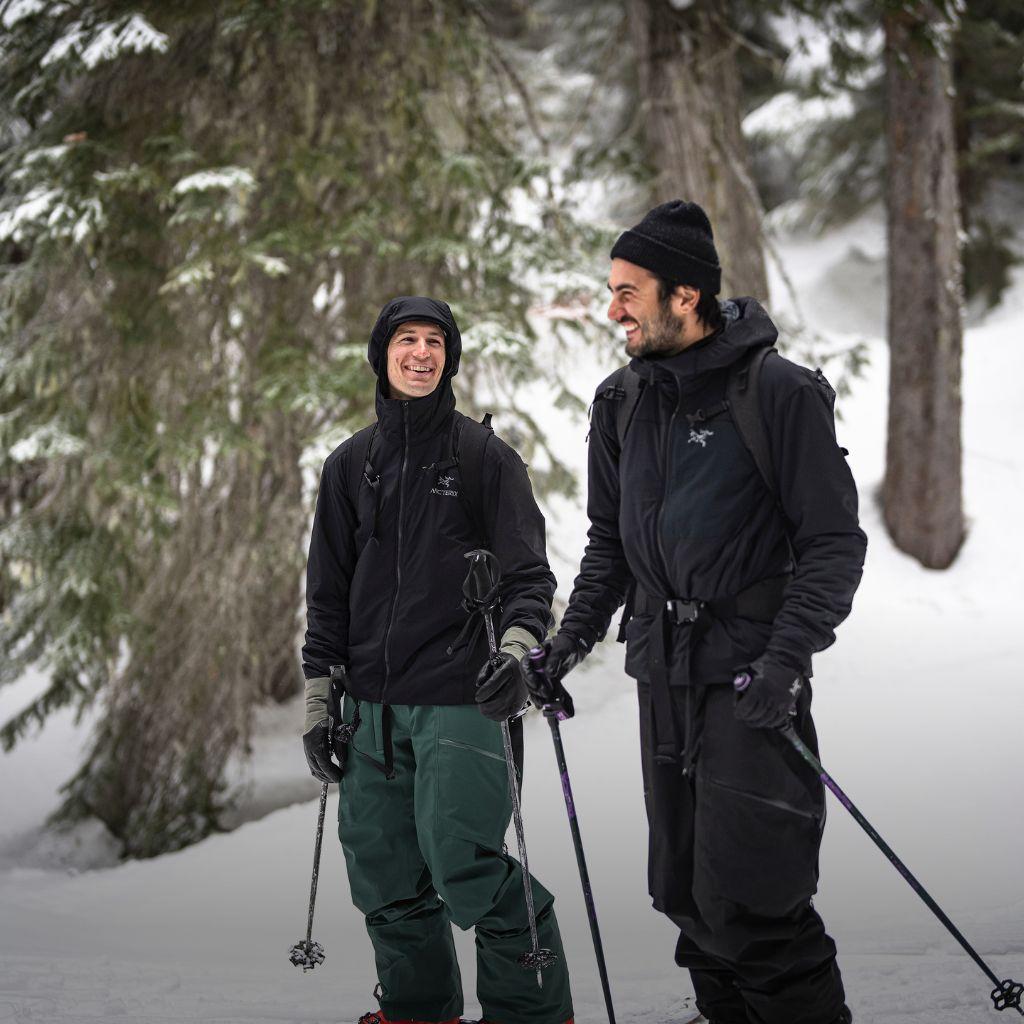
An insulated ski jacket combines a weatherproof outer layer with built-in insulation to deliver consistent warmth in cold environments. These jackets excel for skiers who run cold, frequently ski in extremely cold climates, or spend most of their time at the resort, where long chairlift rides and slower movement increase exposure to wind and low temperatures.
Insulated ski jackets come in different fills, like down or synthetic, and perform differently depending on the insulation type.
Types of insulated ski jackets and why they matter
Down insulated ski jackets
Down insulated jackets like the men’s Macai Jacket or the women’s Andessa Down Jacket, offer the highest warmth-to-weight ratio and exceptional compressibility. It’s ideal for dry, cold climates where maximum thermal efficiency matters. However, down insulation has a tendency to lose performance when wet, making it best for dry interior mountains or deep-winter conditions.
See our down insulated ski jackets.
Synthetic insulated ski jackets
Synthetic insulated ski jackets, like the men’s Sabre Insulated Jacket or the women’s Sentinel Insulated Jacket, use Coreloft™ insulation, a synthetic material that retains warmth even when damp and dries quickly. They’re more reliable in coastal or variable ski climates where wet snow, sweat, and temperature swings are common. Synthetic insulation is also generally more breathable during active movement.
Check out our synthetic insulated ski jackets.
Key factors to consider when choosing shell vs. insulated ski jacket
Understanding whether a shell or insulated ski jacket is right for you depends on several factors, like where you ski, how hard you move, and how your body handles cold weather. Here’s a breakdown of how to assess your ski jacket needs:
Weather and temperature conditions:
Shell ski jackets are ideal if you ski in moderate to warm mountain temperatures — think bluebird ski days, spring conditions, or coastal climates. Their breathability and lack of insulation give you temperature-regulating flexibility when conditions fluctuate or when you naturally run warm.
Insulated ski jackets, on the other hand, excel during stormy resort days or backcountry missions in extreme cold. If cold weather protection is your priority, an insulated jacket delivers consistent warmth without relying as heavily on your midlayers. They keep you comfortable during long chairlift rides, windy ridgelines, and days when the temperature is biting cold.
Activity type and ski style:
If you favour high-output ski or snowboard endeavors, like ski touring or charging powder laps at the resort, shell jackets offer better temperature-regulating flexibility, giving you the breathability you need when conditions fluctuate or when you’re generating plenty of heat.
For resort skiing or backcountry missions in extreme cold where additional insulation is needed during low-output or high-exposure moments, insulated ski jackets are often the most comfortable choice. They deliver optimal warmth without relying heavily on midlayers during slower, lift-assisted laps.
Freeride skiers who frequently move between terrain, climates, and effort levels often lean toward shells for their performance across conditions.
Layering systems and versatility:
A shell paired with a midlayer offers the most customizable warmth and moisture management. With a shell, you can fine-tune your layering system for high-output endeavors — starting with your ski base layer for next-to-skin moisture control, adding a light or heavyweight midlayer for insulation, and finishing with your shell to block wind, snow, and weather.
This setup gives you the best flexibility for temperature management. Swap a fleece midlayer for a down jacket on colder days, rely on your base layer alone during high-output ascents, or use pit zips to quickly release heat as conditions shift.
An insulated ski jacket simplifies the layering process but locks in your insulation level. Because the warmth is built into the outer layer, your midlayer becomes more about moisture management than adding significant insulation. You still rely on a quality base layer to manage sweat and maintain comfort, but your overall system can stay lean. This is ideal for cold starts, resort days, or situations where warmth efficiency matters more than maximum breathability.
Arc’teryx layering philosophy lies in how seamlessly each piece works together. Your system should breathe when you’re climbing, insulate when you’re waiting on the ridge, and shield you when the weather turns.
Check out our Layering Guide to learn more and refine your setup.

Breathability and moisture management:
Shell jackets offer superior breathability thanks to air-permeable membranes, pit zips, and designs built to release heat during high-output movement. This makes shells ideal for touring days and in variable weather where managing sweat and moisture is just as important as staying dry.
Insulated ski jackets provide consistent warmth but can trap more heat and moisture during intense activity. They’re best suited for colder, lift-accessed skiing where you’re generating less sustained body heat and need more reliable insulation rather than maximum ventilation.
Pros and cons: Shell vs. insulated ski jackets
Shell jackets – advantages
Shell ski jackets are highly adaptable across changing conditions. They’re lightweight, easily packable, and work seamlessly with multiple insulating layers, giving you more freedom to adapt your temperature to changing weather and varying levels of output.
Shell jackets – potential drawbacks
Because shells have no built-in insulation, they rely on a strong layering system in cold weather. There’s also a bit of a learning curve as you figure out how to manage heat and moisture effectively using your layers and venting.
Insulated jackets – advantages
Insulated ski jackets simplify your setup by delivering immediate warmth without the need for extra midlayers. They’re ideal for very cold or windy days and excel in lift-accessed resort skiing where consistent insulation makes long chairlift rides more comfortable.
Insulated jackets – potential drawbacks
Insulated jackets are heavier, bulkier, and less breathable than shells. They’re also less adaptable, so if conditions warm up or your output increases, dumping excess heat is going to be harder.
Which jacket is right for you? A quick decision guide:
Go with a shell ski jacket if you:
- Ski in changing or warmer conditions
- Spend time touring, bootpacking, or hiking to lines
- Run warm or tend to overheat on the mountain
- Prefer to fine-tune warmth with insulating layers
- Want maximum breathability and moisture management
- Ski in coastal or wet climates where synthetic layers shine
- Value lightweight, packable outerwear
- Like a system that adapts across freeride, touring, and resort terrain
Choose an insulated ski jacket if you:
- Ski mostly at resorts in cold or windy climates
- Run cold or want reliable warmth with minimal layering
- Spend long periods on lifts where wind chill is a major factor
- Want a simpler, fast-to-build system with fewer midlayers
- Ski in deep-winter or interior climates with dry, bitter cold
- Prioritize warmth efficiency over maximum ventilation
Shell and insulated ski jackets approach protection and warmth in different ways, but both are built to solve the same problem — to help you stay comfortable, dry, and confident through the full range of winter conditions. The best option is the one that supports how you like to move through the mountains.
No matter which route you choose, Arc’teryx builds both shell and insulated ski jackets that are engineered with the materials, construction, and durability needed for demanding alpine environments, from deep-winter resort laps to big terrain in the backcountry.
Explore all Arc’teryx Ski & Snowboard jackets to find the right outer layer for you.
2026-01-07
Related Articles
Essential Ski Base Layers for Comfort on the Slopes
Learn how to stay warm and comfy on the slopes with expert layering tips in this Arc'teryx ultimate guide to good base layers for skiing!
Gore-Tex Ski Jacket Buyer's Guide
Looking for the best Gore-Tex ski jacket? This buyer’s guide from Arc'teryx will help you find the ideal winter ski jacket for when you hit the slopes!
Best Winter Jackets | Complete Buyer's Guide
Looking for the best winter jacket? This buying guide from Arc'teryx breaks down how to shop winter jackets for men and women based on key features and top product recommendations.