Being happy on the mountain starts with being happy in your outerwear. Whether you're pushing your hip deep into resort groomers, hoofing it in the backcountry, or dropping in on freeride terrain, performance in cold, dynamic alpine environments starts with intentional gear choices. Arc’teryx’s ski pants and ski bibs are designed for specific conditions and styles, so you can go exactly where you want to, exactly how you want to.
This guide breaks down how to select ski pants or bibs based on your specific needs, wants, and desires, from fabric technology and insulation to fit and feature integration. Understanding these distinctions helps match your choice in pant to your choice in terrain, weather, style, and accessories.
Understanding the differences between ski pants and bibs
What are ski pants?
Traditional ski pants sit at the waist and are secured with belt loops or an integrated waistband. They're the popular choice for resort skiing and lighter touring days. The waist-level design makes them straightforward to wear and remove, and they pair easily with layering systems without adding bulk across your mid-section and torso.
Benefits include ease of access, compatibility with a wide range of jackets, and a typically lighter-weight construction. Ski pants work well if you prioritize lightness, simplicity, and mobility over maximum coverage, or in some cases if you run too hot in bibs.
What are ski bibs?
Ski bibs extend coverage over the torso and use suspenders instead of a waistband. This design keeps snow out during falls and on deep days, maintains consistent positioning during movement, and eliminates pressure points around the waist from a belt or cinch system. Many backcountry skiers and freeriders favour bibs for comfort, snow protection, and the added storage.
The extended torso coverage provides better protection in deep snow or storm conditions. Bibs also offer more pockets, including on the chest, that allow quick access to tools, snacks, or gear without removing a pack.
Key pros & cons
- Weather protection: Though all our pants are constructed with the same robust fabrics, bibs provide superior snow and wind protection due to torso coverage. Pants rely on jacket integration, powder skirts, or conditions not being consistently deep or blustery.
- Breathability: Both have high breathability with the right fabric, but bibs add a torso layer that may retain more heat during high-output activities.
- Ease of movement: Pants offer unrestricted movement. Bibs can feel a touch more constraining initially but provide better retention during aggressive skiing, and avoid bunching at the belt.
- Access to gear: Bibs excel with chest pockets for immediate access to quick-need items like chapstick, a goggle wipe, or even a phone. Pants require hand and thigh pockets or reliance on jacket storage.
Integration with layering systems: Pants layer cleanly under any jacket. Bibs require extra consideration for things like a transceiver or midlayer, depending on how hot or cold you run and what you might add or subtract from your top section throughout the day.
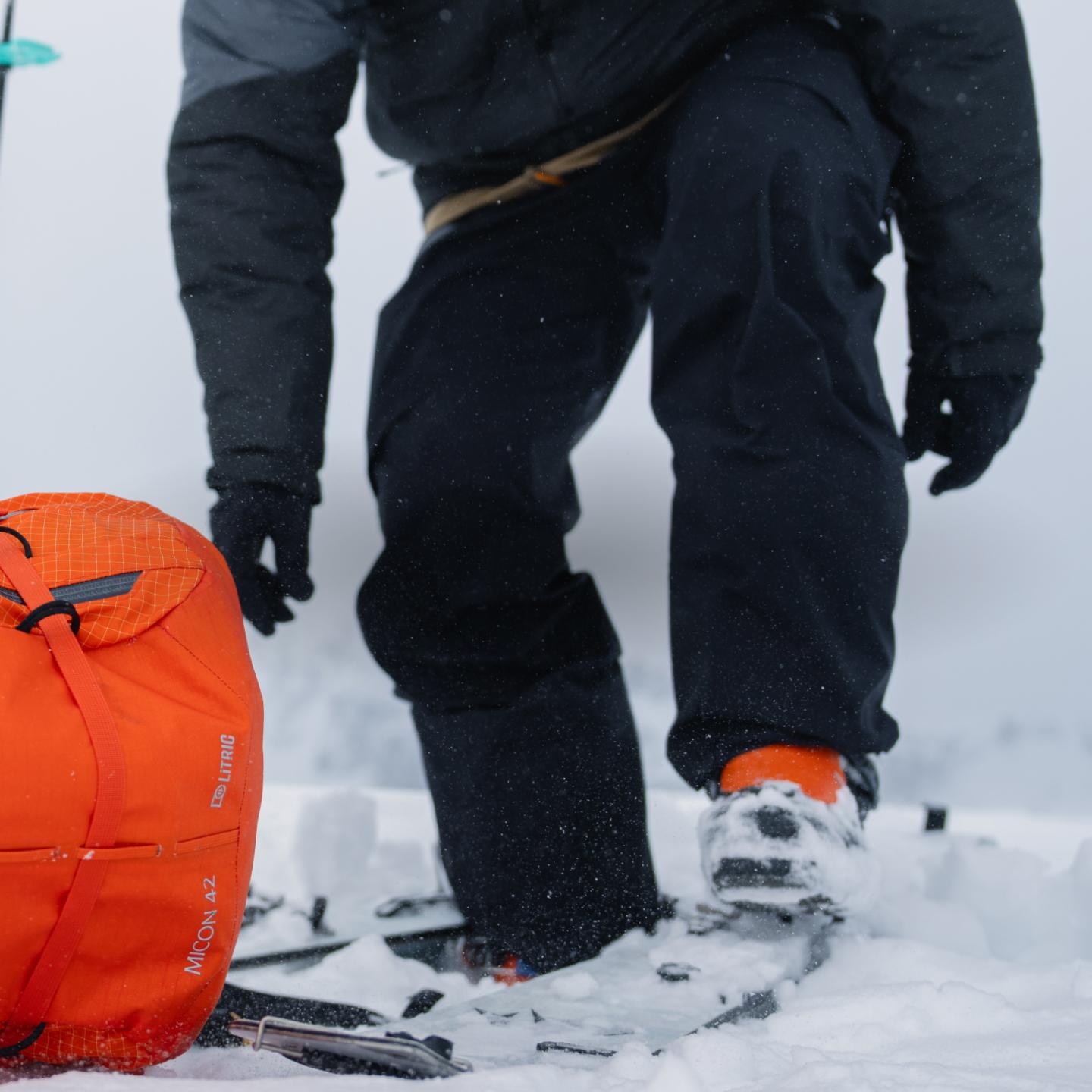
Consider your skiing style: resort, touring, or freeride
Resort skiing
Resort skiing typically involves shorter runs, frequent lift rides, and less aerobic output than touring. Prioritize insulation for chairlift comfort and features that support convenience — like secure pockets and simple ventilation.
Insulated ski pants with inner thigh vents provide thermal regulation without sacrificing warmth. Look for models with reinforced cuffs and integrated gaiters that seal over your ski boots to keep you dry and warm on cold, deep days. Belt loops and adjustable waists also accommodate layering without compromising fit.
Backcountry & Touring
Backcountry skiing and ski touring demand lightweight, breathable fabrics that let moisture escape efficiently during climbs, while also protecting against wind and precipitation. But ultimately you want to be tucked in and comfortable on descents. Lightweight hardshell bibs are the go-to for this ask.
GORE-TEX PRO delivers the best durability and waterproofing in exposed alpine environments. Articulated patterning and gusseted crotches prevent binding when uptracking or bootpacking. Bibs offer extra pockets for quick-grab items like snacks and skin wax, to reduce the amount of times you need to access your pack.
For those that want zero compromise on descents, the Sabre Bib balances freeride durability with weather resistance, while the Rush Bib prioritizes mobility and breathability for ski touring via a lower cut and a stretch fabric at the mid-section.
Key features to evaluate when choosing ski pants or bibs
Fabric technology: hardshell vs. softshell
Hardshell construction uses fully waterproof, windproof membranes — ideal for storm skiing, deep powder, and extended time out on the mountain. These fabrics prioritize protection: modern membranes like GORE-TEX PRO manage moisture effectively while shutting out the weather. We recommend hardshell pants for cold or severe conditions.
Softshell ski pants use stretchy, breathable fabrics that enable mobility and comfort in dry or mild conditions. They're less protective in wet snow or rain but excel during high-output activities when overheating is a concern.
Arc'teryx uses proprietary fabrics tailored for specific conditions. GORE-TEX PRO delivers abrasion resistance for technical terrain, while 3L softshell constructions enhance mobility and offer moderate weather resistance.
Insulated vs. non-insulated
Insulated ski pants are filled with synthetic fill between the shell and lining. They're best for frigid resort days, lower aerobic output, or for those who run cold. Insulation provides consistent warmth on lifts, during descents, and if you find yourself stationary outside.
Non-insulated pants offer flexibility with layering. Heavier base layers will keep you warmer, lighter ones will let you vent more. Shell-only construction is standard for backcountry skiing, where how hard you’re working typically fluctuates dramatically between climbs and descents. The reduced bulk and weight also help you stay quick on your feet.
Ventilation & breathability
Inner thigh vents and side zips provide on-demand cooling when you’re making lots of heat. Thermal regulation is critical when transitioning between aerobic touring and descending. It’s also especially handy on mild days, like in the spring.
Vents alone aren’t sufficient for thermal regulation during intense activity. The membranes we use, like GORE-TEX PRO, act as a one-way valve that lets heat and moisture out, but nothing from the outside in. In other words, vapour from sweat is expelled, while sleet and snow are shut out. This allows rapid heat dumping without removing layers, and without letting moisture
Fit & integration with gear
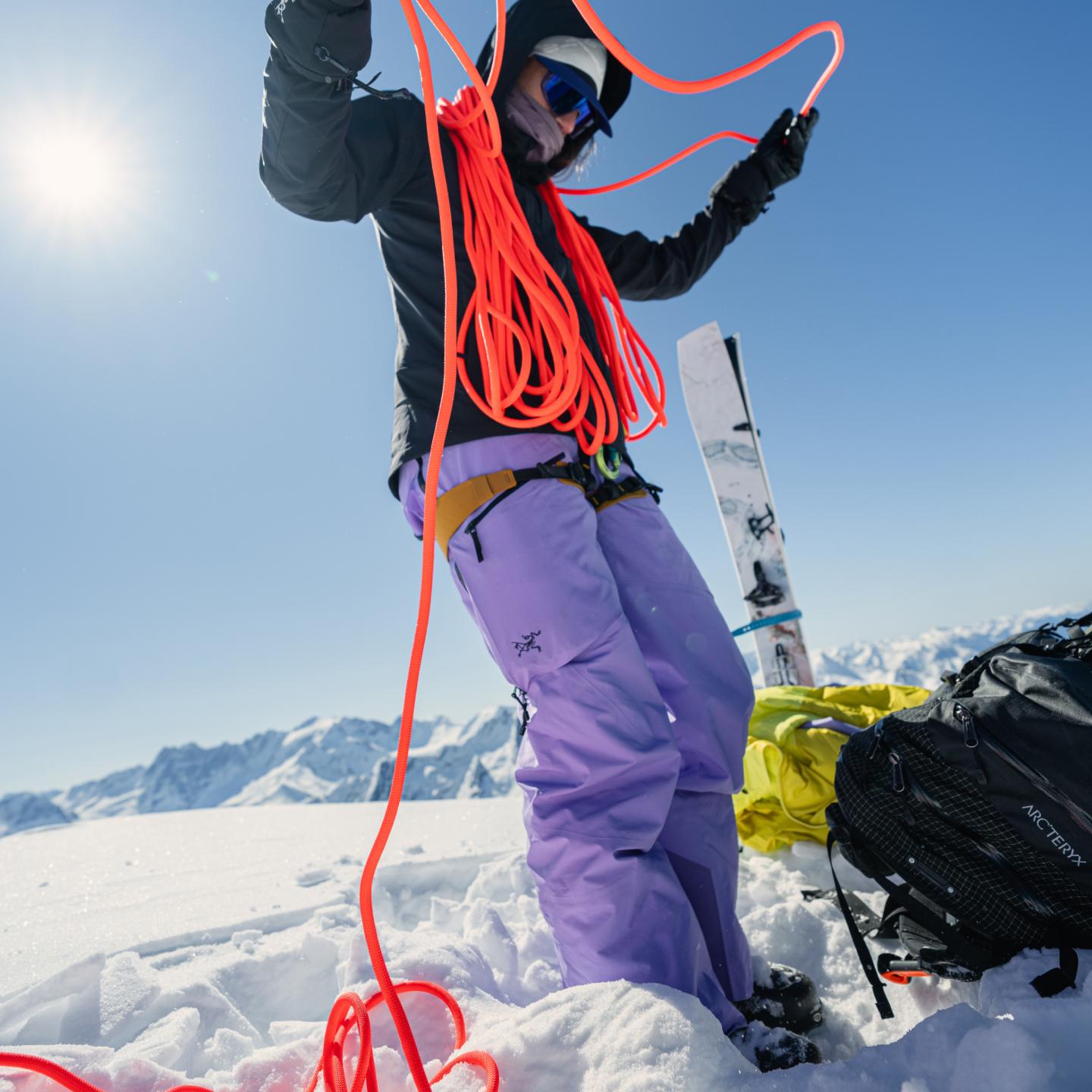
Arc’teryx has long been all about articulation, because freedom of movement is what keeps you moving. We build all our pants with articulated knees, gusseted crotches, and anatomical patterning to prevent fabric from binding during deep knee bends or high steps. They’re also designed with either suspenders, integrated waist cinches, belt loops, or a combination thereof to make sure they ride exactly where they’re supposed to — never too high, never too low.
Keeping snow out means ski pants need to be compatible with your boots. Internal gaiters (sometimes zippered) seal over boots to prevent ingress by the elements in all their frozen or unfrozen forms. Some pants include boot clips that anchor the gaiter in place.
Reinforced hems resist abrasion from ski edges and provide a bit more toughness around your boots. Some pants have specific jacket integrations meaning they clip together. Powder skirts or snap-in systems prevent gaps that would let snow in during falls or on deep days, but bibs also inherently solve this problem. Some folks like to wear their midlayers under bibs for even more protection, but this does limit layering adjustability throughout the day.
Storage & functionality
Thigh pockets are accessible with gloved hands and great for bulky items like snacks, beanies, and extra gloves. Internal pockets within thigh pockets are good for phones and GPS devices. Chest pockets on backcountry bibs allow high-priority items to stay close and warm, and come with loops that allow you to safely clip keys and other essentials to them.
Your transceiver should always be worn under your midlayer, and over only your baselayer. It should always stay put for the day — i.e. you never remove it with a layer. Wear your transceiver over bib pants, where you can access it, but where it’s sheltered by your mid and outer layers. All Arc’teryx pants are designed to be compatible and comfortable with transceivers.
How to choose the right Arc'teryx ski pants or bibs for you
We design all our ski pants around performance criteria and specific use cases:
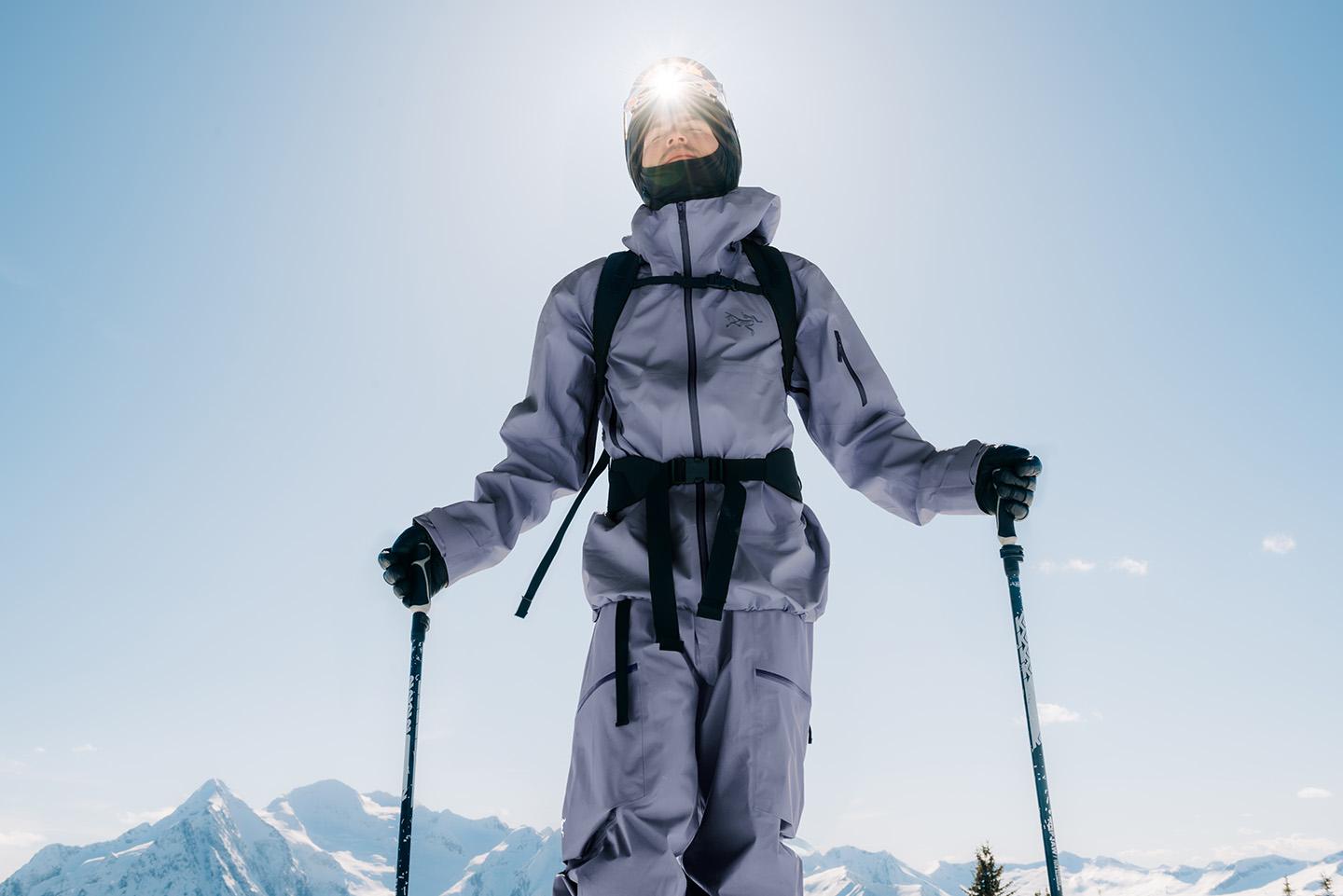
The Sabre Bib and Sentinel Bib are both built for freeride, where toughness and weather protection are paramount. GORE-TEX construction handles storm conditions and technical terrain when paired with a strong face fabric. Choose these for aggressive resort skiing or burly backcountry objectives where durability is important.
The Rush Bib is designed specifically for ski touring and backcountry efficiency. Lightweight construction, articulated fit, and strategic breathability support long climbs without sacrificing descent performance. This option is ideal when movement and weight matter more than maximum insulation.
The Sentinel Pant (Women) and Sabre Pant (Men) are hybrid designs that function across resort and touring applications. They are versatile enough for varied skiing styles without committing to a single specialty. They are simpler and lighter than bibs, but just as protective from the waist down.
Your checklist for the best ski pants or bibs
Before selecting ski pants or bibs, answer these questions:
What terrain do you ski most often? Resort skiers prioritize different features than backcountry skiers. Match your gear to where you spend the majority of your time.
Do you need insulation or thermal regulation? Cold, low-output days benefit from insulated pants, variable weather conditions and aerobic skiing calls for shell-only designs.
Do you prioritize weight or durability? Lightweight touring gear sacrifices some abrasion resistance. Freeride gear prioritizes protection over lightness.
How much storage do you need for gear access? If you're frequently accessing tools, snacks, and GPS or ditching your beanie and mitts, bibs with chest and thigh pockets reduce reliance on pack access.
Arc'teryx ski pants are made to go where you do. Born and bred in the blustery Coast Mountains of British Columbia, tried and tested for decades by freeriders, ski tourers, and ski mountaineers. Dive into our full collection to find the right option for you, and unlock a winter full of potential.
2026-01-16
Related Articles
Shell vs. Insulated Ski Jackets: Buyer's Guide
Learn the difference between shell and insulated ski jackets to choose the right gear for your conditions, activity level, and layering strategy.
Gore-Tex Ski Jacket Buyer's Guide
Looking for the best Gore-Tex ski jacket? This buyer’s guide from Arc'teryx will help you find the ideal winter ski jacket for when you hit the slopes!
Essential Ski Base Layers for Comfort on the Slopes
Learn how to stay warm and comfy on the slopes with expert layering tips in this Arc'teryx ultimate guide to good base layers for skiing!