Do you ever stand there in the morning before a day in the mountains or prepping for a wet coastal hike, wondering what to wear? How cold is it going to be? What happens if it rains? Should you pack a softshell, a hardshell, wool, down, or synthetic insulation?
Staying warm, dry, and comfortable when active outdoors is a bit of an art. Conditions shift quickly and place constant demands on you and your clothing. As elevation or effort levels change, what works in one moment can fall apart in the next.
In this guide, we break down the key components of how to layer waterproof and weather-resistant gear, along with a few core principles and real-world scenarios for optimal comfort and protection while moving outdoors.
Understanding the science of layering for outdoor performance
The key to staying warm and comfortable when active outdoors is all about maintaining a stable body temperature as conditions and exertion change. The most effective way to do this is through layering.
A well-designed layering system allows your clothing to adapt alongside both the environment and your activity level. During high-output activities like alpine climbing, ski touring, and trail running, your system needs to release excess heat and move moisture away from your skin. When your pace slows or conditions deteriorate, those same layers need to retain warmth and block wind, rain, and snow.
If your clothing traps too much heat during movement, sweat can quickly build up and reduce insulation from the inside out. If your layers fail to protect against wind, rain, or snow, external moisture can reach your inner layers and accelerate heat loss.
Perfectly balancing breathability and weather protection is what makes a layering system work. Each layer works together to release heat when you’re moving, retain it when you’re not, and protect you from the elements the entire time.
The three-layer system: a technical breakdown
A functional layering system relies on three components: a base layer, a midlayer, and an outer shell.
Understanding how each of these layers interacts will help you build a complete system that performs properly across a wide range of conditions.

Base layer – managing moisture and temperature
Your base layer sits directly against your skin and is responsible for managing moisture from the inside out. As you move and generate heat during output, your base layer should pull sweat away from your body to keep you dry and help maintain a stable body temperature. This prevents the clammy chill that can happen when sweat builds up during movement and temperatures drop during rest.
As the foundation of your entire layering system, your base layer should be lightweight, moisture-wicking, quick-drying and fit comfortably under your midlayer.
Our technical base layers are made from synthetic fabrics, Merino wool, or hybrid constructions. Each material offers different advantages depending on how you’re moving through the environment.
Synthetic base layers
Synthetic layers are often preferred for high-output activities like trail running and ski touring because they manage sweat so effectively. Our synthetic base layers use technical fabrics like Phasic™, which combine hydrophobic and hydrophilic yarns to efficiently move moisture away from the skin and dry quickly.
They’re available in a range of insulation levels, allowing you to choose the right balance of warmth and breathability depending on the conditions. Lightweight options like our men’s Rho LT and women’s Rho LT prioritize moisture management for fast-moving activities.
Merino base layers
Merino wool provides natural temperature regulation, resists odour, and remains comfortable even when damp, making it a strong choice for cold, wet environments and extended wear.
Our men's Rho Merino Wool and women’s Satoro Merino Wool series use Responsible Wool Standard (RWS) certified Merino blended with elastane for extra stretch and mobility. This blend creates a soft, breathable base layer that moves with you, and layers cleanly under midlayers and shells for a variety of mountain objectives.
Hybrid base layers
Our hybrid base layers combine targeted insulation with breathable technical fabrics, adding warmth where you lose heat most while maintaining ventilation in high-output zones. They’re well-suited for cold, exposed environments where both warmth and moisture management are critical.
The Rho Hybrid Insulated Bottom uses low-profile insulation across the thighs and hips, which are areas prone to heat loss, while breathable Torrent™ panels improve mobility and ventilation so you don’t overheat on the move.
One universal rule applies across all outdoor layering systems: avoid cotton. Cotton absorbs moisture and dries slowly, which can accelerate heat loss and make it difficult to maintain body temperature when active outdoors.
Midlayer – insulation to retain heat
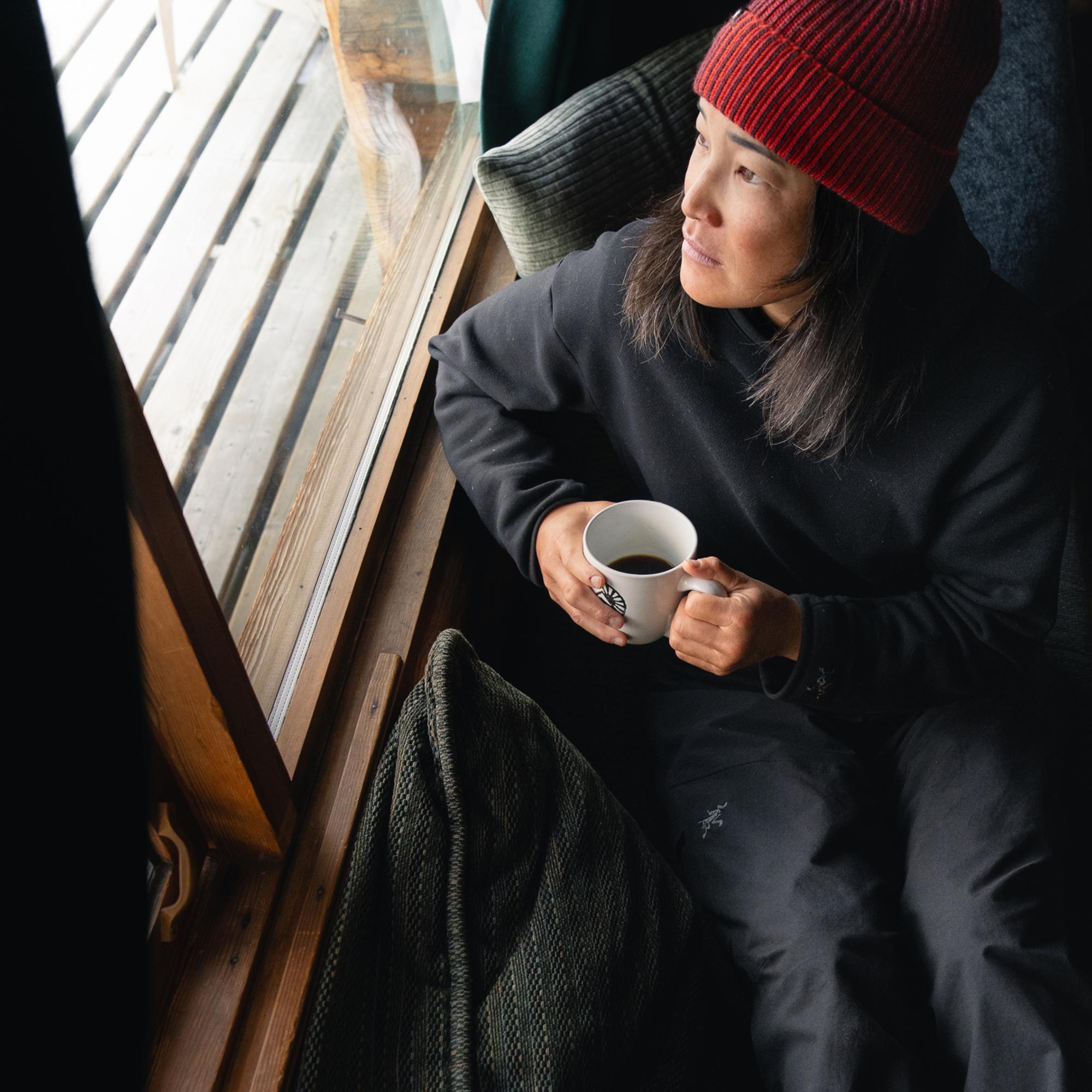
The purpose of your midlayer is to trap and retain body heat by holding warm air close to your body, while still allowing moisture to move through your layering system and escape outward.
Material and weight determine how a midlayer performs in changing conditions, influencing warmth, breathability, and temperature regulation. The right choice depends on your output level and the environment you’re moving through for your specific objective.
Arc’teryx midlayers use three types of insulation: down, synthetic, and fleece. Each is designed to perform under different conditions and activity levels.
Down midlayers
Down insulation provides exceptional warmth-to-weight performance and compressibility, making it ideal for cold, dry environments or situations where extra warmth is needed during rest, then easily stowed once you start moving. Down loses much of its insulating ability when wet, so it’s not ideal for damp or coastal environments.
Down-insulated jackets like the Cerium (men’s, women’s) are a popular choice for cold alpine conditions or a packable layer during hiking breaks.
Synthetic midlayers
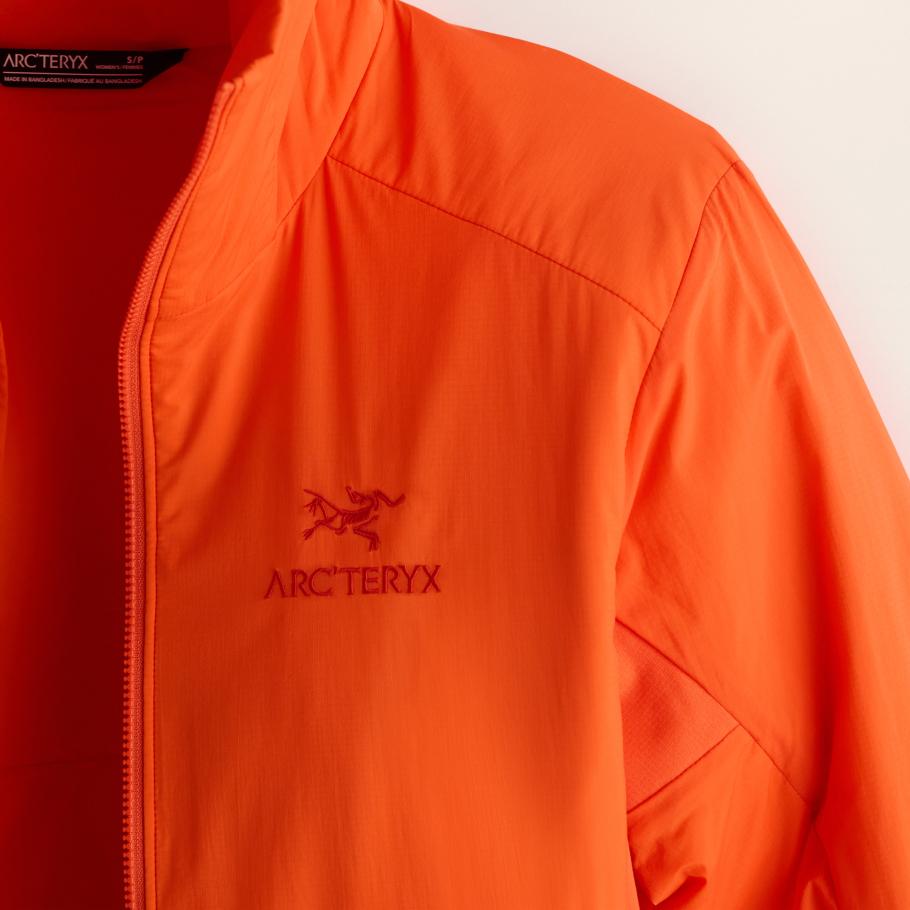
Synthetic insulation maintains warmth even when exposed to moisture, making it a reliable choice for wet climates or high-output activities where sweat and humidity are factors. Pieces like the men’s Atom Hoody or women’s Atom Hoody use lightweight synthetic insulation to balance warmth, breathability, and mobility across a wide range of activities.
Breathable side panels help release excess heat, allowing the layer to continue regulating temperature during activities like climbing, hiking, or ski touring.
Fleece midlayers
Fleece midlayers provide breathable warmth and dry quickly, making them a strong option during sustained movement or in damp environments. Pieces in the Kyanite family are often used for climbing, hiking, or layering under a shell when airflow and mobility are priorities.
Because activity levels change so much throughout the day, your midlayer is often the most dynamic part of your system. It's the piece you’ll most often take off and stow in your pack during high-output movement, then pull back on during breaks or when temperatures drop.
CTA: Shop men’s midlayers
Outer layer – protection from wind, rain, and snow
Your outer layer is your primary defense against the elements. This protective shell keeps external moisture out while allowing excess heat and moisture to escape, helping maintain a stable body temperature as weather and activity levels change.
Arc'teryx outer layers generally fall into two categories: waterproof hardshells and weather-resistant softshells, and both serve a different purpose depending on the conditions and the level of protection you need for your objective.
Hardshell jackets
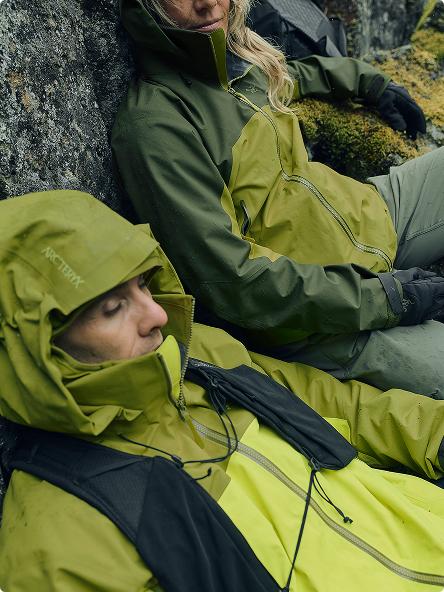
Waterproof hardshell jackets are often built with GORE-TEX® technology to provide complete protection from sustained wind, rain, and snow. These shells use a waterproof breathable membrane and durable face fabrics to prevent external moisture from penetrating the garment while allowing internal moisture vapour to escape.
Hardshell jackets, like the Alpha and Beta families, are specifically built for prolonged exposure to wet weather and environments where reliable weather protection is critical.
Learn more about our best GORE-TEX® jackets here.
Softshell jackets
Weather-resistant softshell layers offer a different balance of breathability and protection. Designed for mixed conditions where wind, light precipitation, and high-output activity are expected, softshells prioritize airflow, stretch, and freedom of movement while still providing a degree of weather resistance.
They’re often preferred for activities like alpine climbing, ski touring, or fast-moving hikes where overheating and moisture buildup can become a greater concern than full waterproof coverage. Softshell families such as Gamma (men’s, women’s) focus on breathability and mobility for sustained movement in variable mountain conditions.
In some situations, a breathable softshell, like the men’s Gamma Hoody or women’s Gamma Hoody, can also function as a midlayer. They work well as a midlayer in cold, high-output conditions, where added weather resistance and airflow help regulate temperature without overheating.
Learn more about our best softshell jackets.
Choosing between a waterproof hardshell and a breathable softshell ultimately depends on the conditions you expect to encounter during your outing.
Layering strategies for real-world scenarios
Different environments demand different layering strategies. Adapting your layers to different environments helps regulate temperature and manage moisture as conditions change.
Below are a few common mountain scenarios and how a layering system can be adjusted to perform in each one.
Layering for alpine touring and backcountry skiing
Backcountry skiing and alpine touring demand a layering system that can keep up with high-output movement in cold conditions. Your day often starts with cold, sedentary activity like getting ready at the car or taking the chairlift up to access the backcountry, so starting warm is key. Once you begin climbing, however, your body heat rises quickly, and excess layers can lead to overheating.
Many experienced tourers follow a simple rule: be bold, start cold. This essentially means remove any extra insulation before you begin the climb to prevent sweat buildup.
As you break trail or follow a skin track, managing heat becomes critical. Get comfortable with adjusting your midlayers and opening your vents in your outerwear (pit zips and leg zips) on the move and according to what feels most comfortable. By the time you reach a ridge or summit to transition for the descent, any moisture that has built up can quickly turn into a bone-chilling cold if it isn’t managed properly. Adding insulation when you stop, even briefly, helps trap warmth before your body cools down.
Once you’re ready to drop in, sealing up your layers again keeps wind and snow out during the descent. Then repeat the process.
Some go-to layering combinations for backcountry skiing and alpine touring include:
Base Layer
A lightweight moisture-managing ski base layer, like the Rho LT, moves sweat away from the skin during sustained climbs, helping prevent moisture from cooling against the body during transitions or descents.
Midlayer
A breathable midlayer like the Proton LT or Atom LT provides warmth that adapts as your output rises and falls while climbing. If you tend to run a little colder, the Cerium Hoody offers lightweight warmth that packs down easily when not in use.
Outer Layer
When conditions turn or winds sweep across exposed alpine terrain, a durable waterproof-breathable shell like the Rush family seals out snow and wind without restricting movement.
Layering for multi-day hiking in coastal rainforests
Coastal rainforests present a different layering challenge than dry alpine environments. Instead of managing brief storms or cold temperatures alone, you’re often dealing with persistent moisture for days at a time. Even when it isn’t actively raining, humidity hangs in the air and on vegetation that brushes against your clothing, and the overall dampness can slowly work its way into your layers.
A dependable rain jacket or waterproof shell is essential to keep wet weather out while you hike. Wind can also be a factor along exposed sections of the coast, so a reliable shell that blocks rain and wind while still allowing moisture to escape helps prevent dampness from building up inside your clothing throughout the day.
On multi-day trips where you’re carrying all your gear, wet clothing can quickly become a problem. Heavy, waterlogged layers that won’t dry overnight add unnecessary weight to your pack and make the next day’s hike more difficult. Lightweight fabrics that dry quickly help keep your pack manageable and your layering system comfortable day after day.
The most reliable layering systems for coastal hiking prioritize quick-drying fabrics, synthetic insulation, and a dependable waterproof shell. Synthetic insulation continues to provide warmth even when damp, making it a more practical option than down in consistently wet environments.
Some go-to layering combinations for multi-day hiking in coastal rainforests include:
Base Layer
Merino base layers like the Satoro and Rho are ideal for damp environments. They regulate temperature, stay warm even when wet, and remain comfortable over several days of wear.
Midlayer
A breathable synthetic midlayer like the Atom Hoody or Proton Hoody, or a warm fleece like the Kyanite, adds warmth during cool mornings and breaks while continuing to perform even if conditions get wet.
Outer Layer
A dependable waterproof shell like the Beta SV, Beta AR or Beta LT protects against steady rain, coastal wind, and wet vegetation while remaining breathable enough for long days on the trail.
Layering for shoulder season hiking in the Rockies
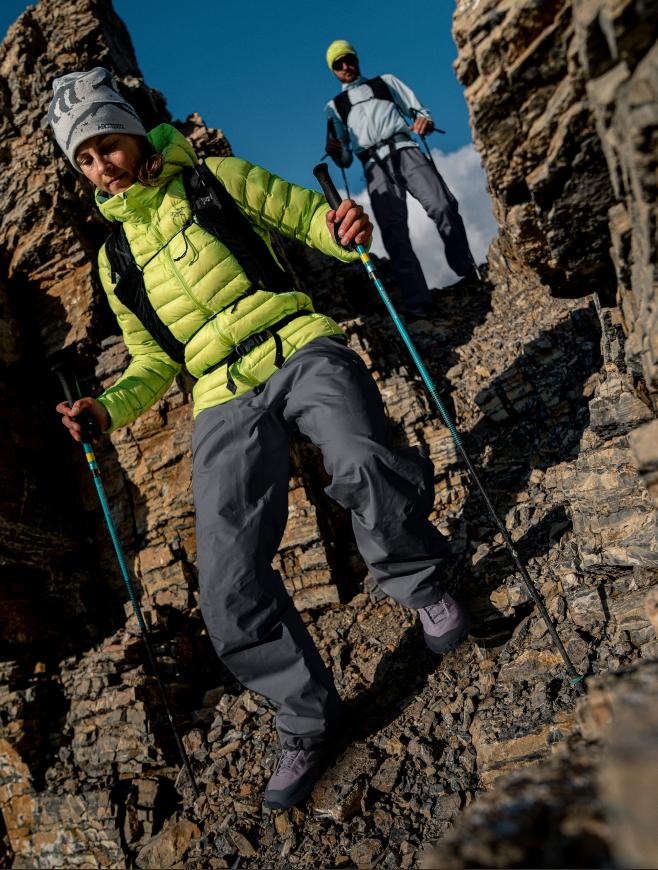
Spring and fall in the Rockies often bring some of the most unpredictable mountain weather. Early mornings can start well below freezing, especially at higher elevations. As the sun rises and the day warms up, temperatures can climb quickly during long ascents or exposed hiking above treeline. Managing layers throughout the day becomes key to staying comfortable as conditions change.
Wind is one of the biggest factors in the Rockies during the shoulder seasons. Above the treeline, there’s little natural shelter, and exposed ridgelines can funnel strong alpine winds that quickly strip away body heat. A reliable shell that blocks wind while still allowing moisture to escape helps prevent that cold air from cutting through your layers.
Terrain is another consideration. Rocky trails, scrambling sections, and abrasive surfaces mean durability becomes more important than it might be on well-maintained forest trails. Layers that can handle contact with rock or rough terrain without tearing are worth prioritizing.
Although the Rockies are generally much drier than coastal environments, weather can still change quickly during the shoulder seasons. Sudden rain showers or early snow are common in spring and fall, so it’s important to carry layers that can handle unexpected weather as well as cold temperatures.
Some go-to layering combinations for shoulder season hiking in the Rockies include:
Base Layer
A warm base layer like the Rho Merino Wool series provides insulation for cold alpine mornings while still regulating temperature as you begin moving. For colder conditions or lower-output days, a hybrid base layer can add targeted warmth while still allowing for ventilation in high-output zones.
Midlayer
A breathable fleece midlayer, such as the Delta Hoody or Kyanite Hoody, adds warmth during cool starts and windy ridgelines while remaining highly breathable during steady hiking. In variable shoulder season conditions, a lightweight insulated vest, like the Atom Vest, can provide targeted core warmth without overheating as temperatures fluctuate throughout the day.
Outer Layer
A softshell like the Gamma Hoody provides wind resistance and abrasion protection while scrambling over rocky terrain or hiking exposed alpine ridges.
Emergency Layer
A waterproof shell like the Beta SV or Beta AR protects against sudden rain or early-season snow and provides reliable wind protection in exposed alpine terrain.
Pro tips for maximizing your layering system
A layering system only works if you adjust it as conditions change. These tips can help you manage moisture, regulate body temperature, and get the most out of your layers throughout the day. Read our full article on layering tips for all weather conditions.
Adjust layers before you start sweating.
Once moisture builds up inside your system, it becomes much harder to regulate body temperature.
Use your outer layer vents before removing layers.
Opening pit zips or leg vents can help release excess heat without fully removing insulation or exposing your base layer to wind and weather.
Keep key layers accessible in your pack.
A shell or extra insulating layer should be easy to reach when weather conditions shift quickly.
Don’t neglect your lower-body layers.
Waterproof hiking pants, gaiters, or weather-resistant softshell pants can help protect against rain, snow, and saturated trail conditions.
Watch for signs your system isn’t working.
If you have clammy skin and are overheating during climbs, or you get sudden chills during rest breaks, you’ll want to adjust your layers.
Choose insulation based on the environment.
In wet or humid climates, synthetic insulation can outperform down by maintaining warmth even when exposed to moisture.
Keep one dry layer reserved for camp.
Packing a dry insulating layer to change into at the end of the day helps restore warmth and comfort after hiking in damp clothing.
Conclusion: building your layering system
The best layering systems are built around how each piece works together as conditions change throughout the day. By combining moisture-managing base layers, breathable insulating midlayers, and the right outerwear, you can regulate temperature, manage moisture, and stay comfortable across a wide range of conditions and activities.
Choosing between waterproof and weather-resistant protection depends on the environment, your level of output, and how much exposure you expect. Understanding how those outer layers fit within your system allows you to adapt as conditions shift and make more informed decisions in the field.
Check out our full range of Arc'teryx waterproof and weather-resistant gear online or stop by a local retailer to try them on, and get back out there.
2026-04-09
Related Articles
Understanding Arc'teryx’s Base Layer Technology
Discover the science behind Arc'teryx's innovative base layer technology for enhanced comfort, moisture management, and temperature regulation.
Essential Ski Base Layers for Comfort on the Slopes
Learn how to stay warm and comfy on the slopes with expert layering tips in this Arc'teryx ultimate guide to good base layers for skiing!
Layering Clothes Like a Pro
Master the art of layering with Arc'teryx! Discover expert tips and techniques to stay warm, dry, and comfortable in any weather.